
GUIDE
Offset Printing
Offset lithography transfers ink from a flat printing plate to a rubber blanket and then to paper. It is built for controlled colour, fine detail and consistent sheet-fed production.
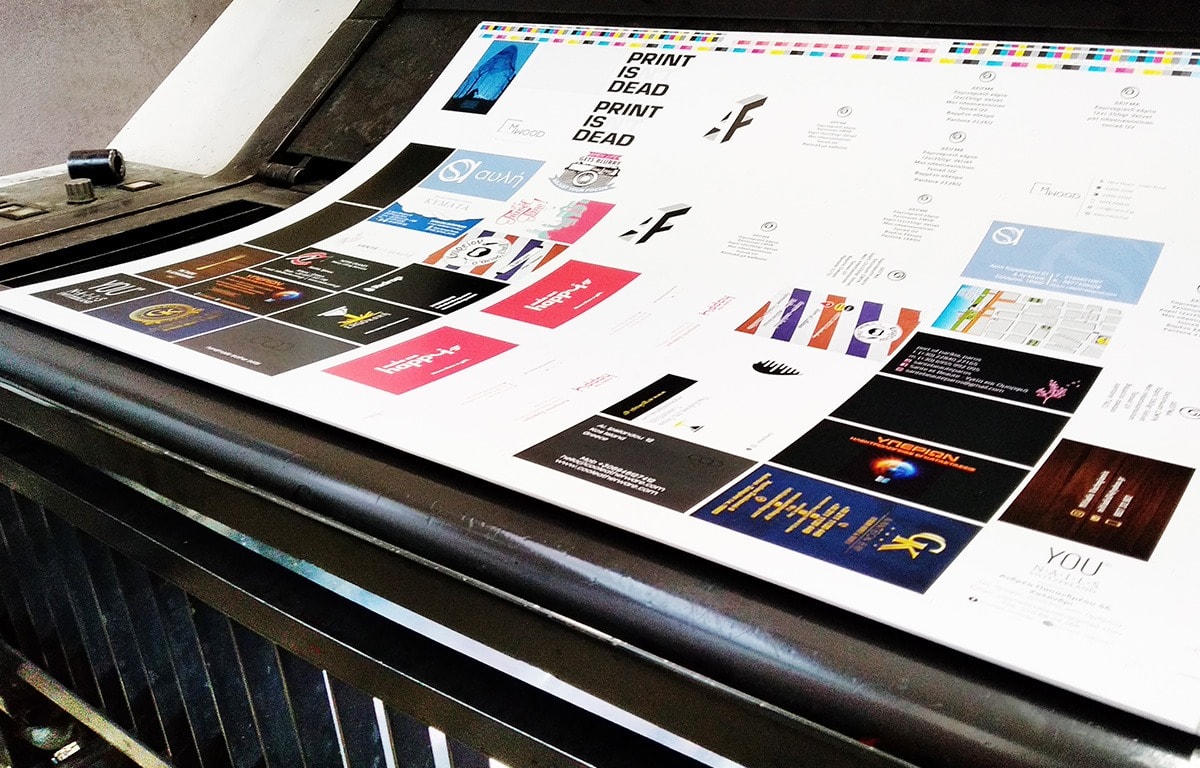
INDIRECT PRINT
The plate transfers its inked image to a rubber blanket before the paper.
PLANOGRAPHIC
Image and non-image areas share a flat plate surface and differ chemically.
COLOUR UNITS
CMYK or spot inks are carried by separate printing units and plates.
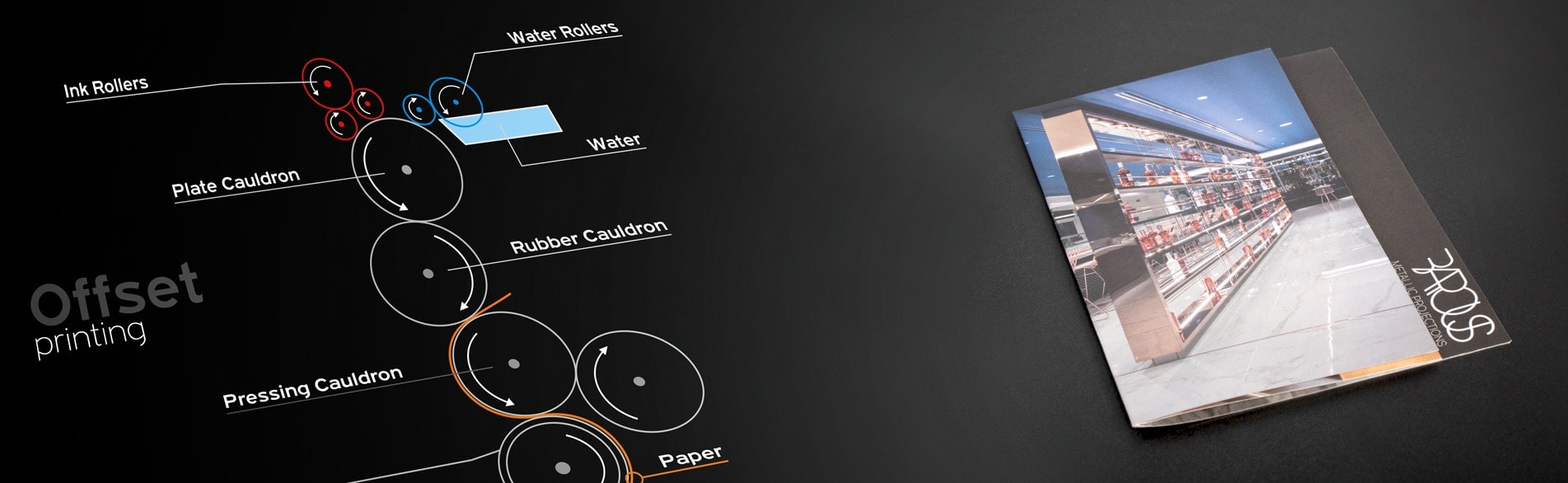
HOW IT WORKS
Plate to blanket. Blanket to paper.
Offset lithography uses a plate whose image and non-image areas are essentially on the same plane. Their different chemical properties control where ink is accepted and where it is repelled.
The plate does not print directly onto the paper. Its inked image first transfers to a flexible rubber blanket; the blanket then transfers that image to the moving sheet, which is why the process is called offset.
Each process or spot colour has its own plate and printing unit. A multi-unit press can place several colours during one passage through the press, so CMYK does not necessarily mean sending the sheet through four separate times.

WHAT IT CHANGES
Controlled colour before specialist finishing.
Offset often supplies the printed foundation; paper and later processes determine the final character.
01
Detailed CMYK
Photographs, gradients and fine halftones can be reproduced through controlled combinations of cyan, magenta, yellow and black.
02
Purposeful spot ink
A named premixed colour can be printed when the identity calls for control beyond an ordinary CMYK approximation.
03
Repeatable sheets
Press setup, ink balance and registration are controlled across the run before cutting and specialist finishing begin.
WHEN TO USE IT
Best when printed colour carries information.
Offset suits detailed brand colour, photography, illustration and quantities where a press-made plate and controlled run are justified. It can also provide the base print for lamination, Spot UV, foil or bonded constructions.
Ink is not equally opaque on every paper. Dark, absorbent and strongly coloured stocks may call for a different ink strategy or an opaque process such as foil.
CONSIDER BEFORE CHOOSING
- Paper colour and coating affect density, drying and perceived colour.
- Each spot or process colour requires its own plate and controlled registration.
- Printed sheets may need appropriate drying time before finishing.
- Very short runs or variable data may be better served by another print process.
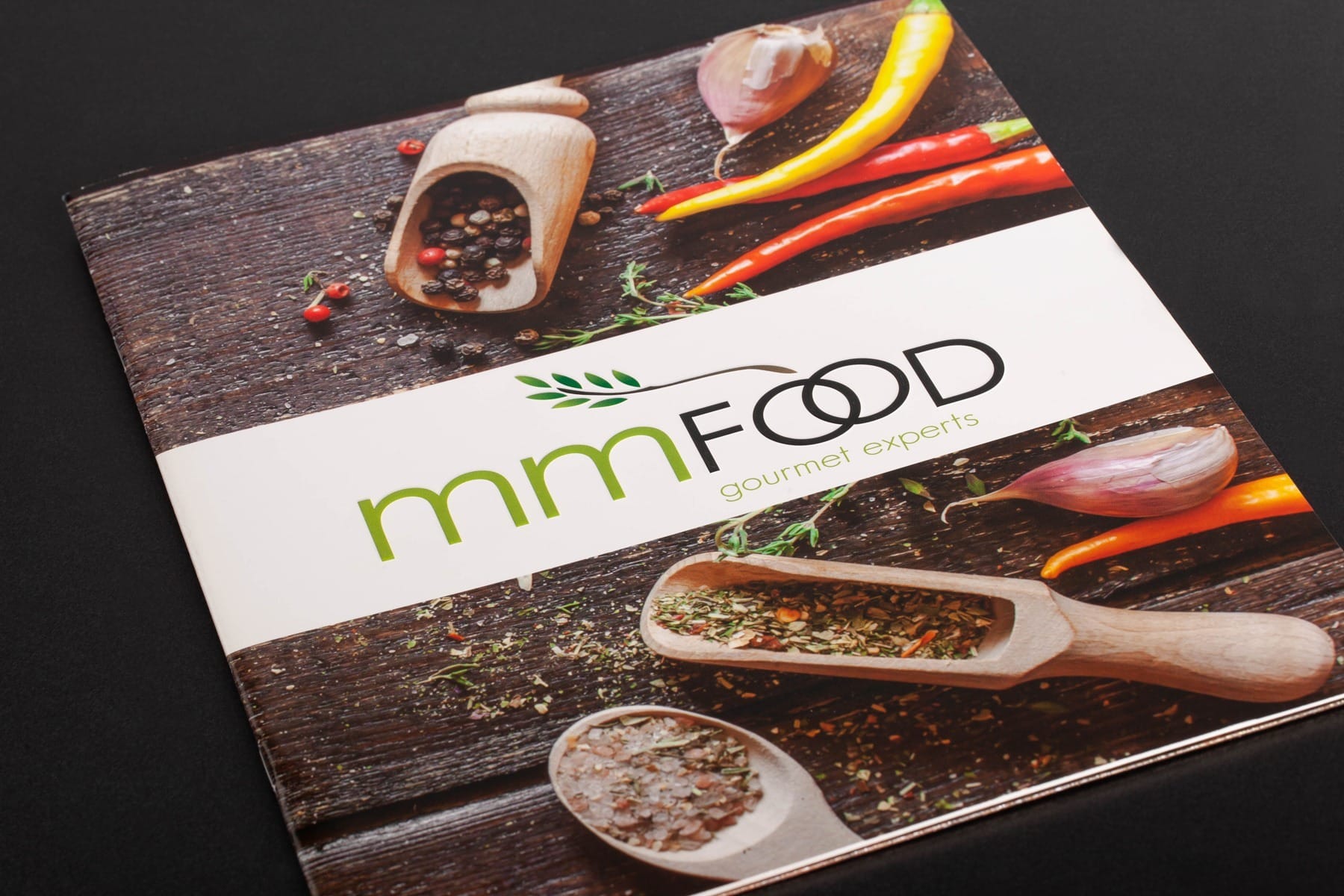
ARTWORK PREPARATION
Prepare colour for a real press sheet.
Supply print-ready artwork with the required bleed, effective image resolution and final page size. Identify whether colours are CMYK builds or named spot inks, and include embedded or linked assets correctly.
Check overprint, rich-black construction and small reversed type before output. Put foil, Spot UV, embossing and cutting information on separate named layers rather than mixing them into the print image.
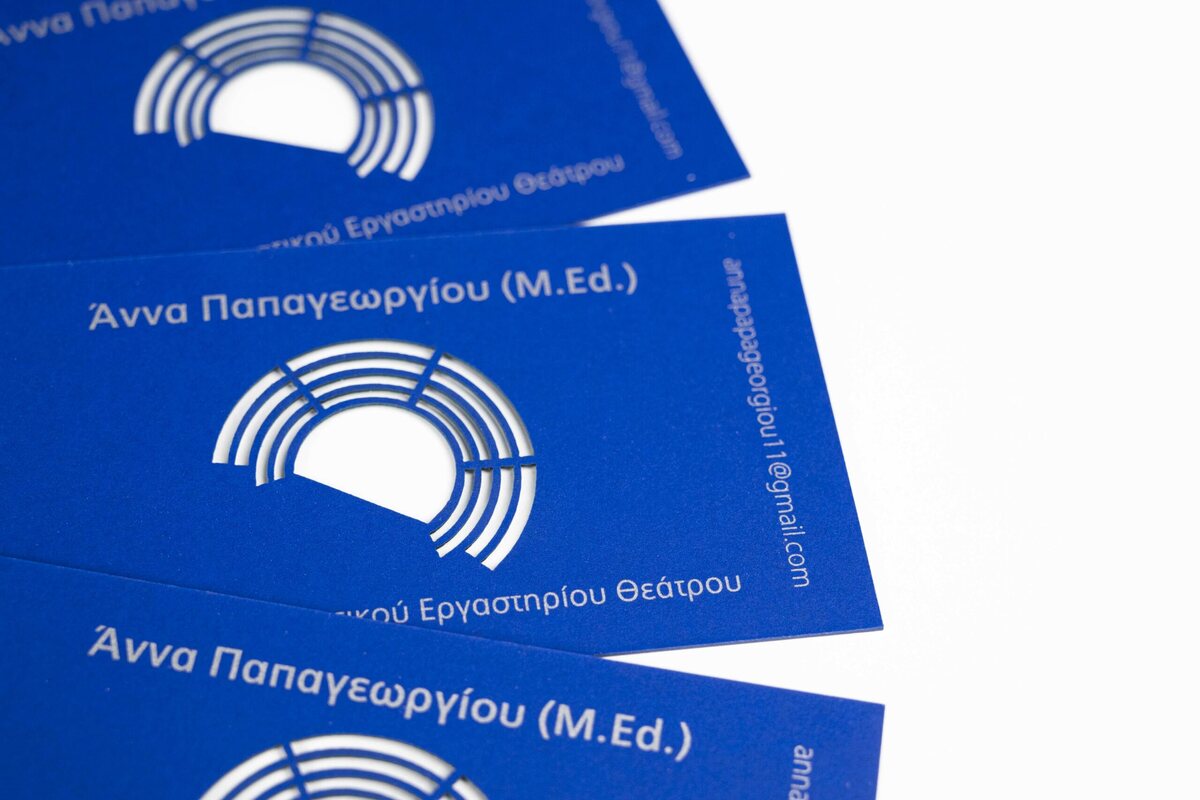
FINISHED WORK
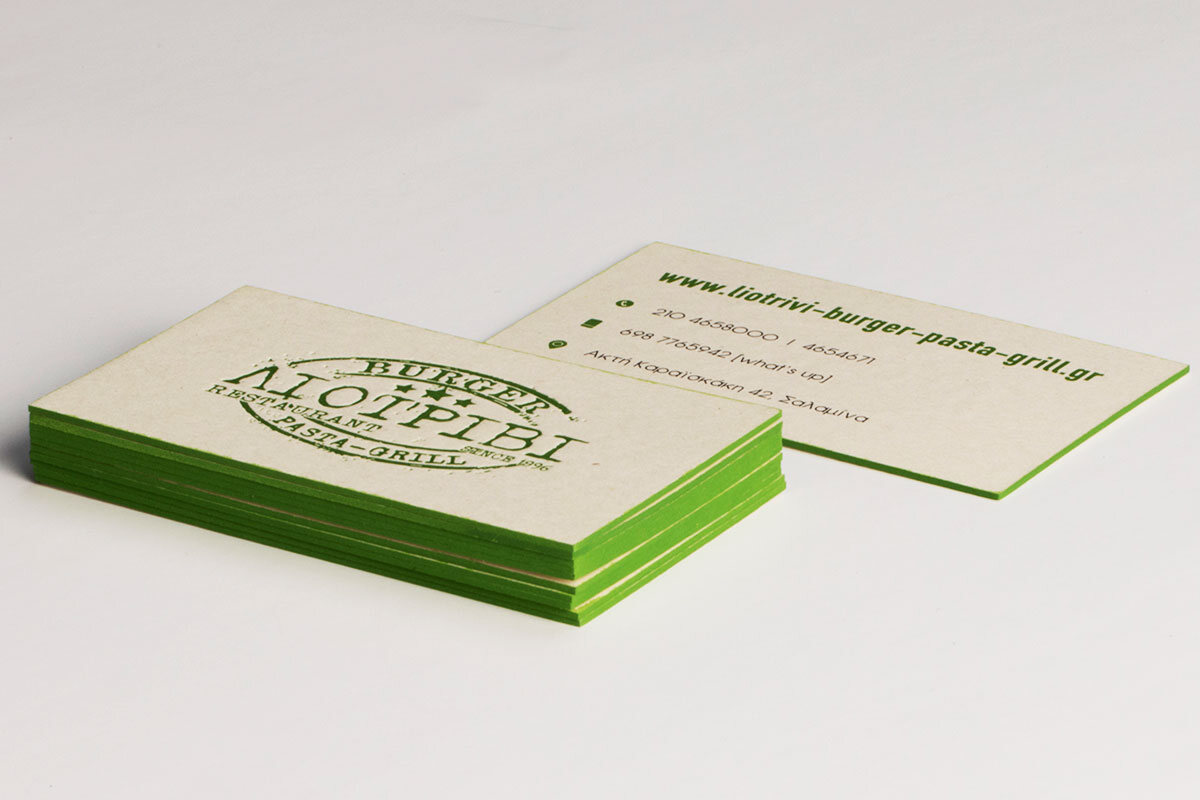
Colour can remain clean—or support texture.
The process is versatile, but the premium result comes from choosing the right paper and finishing sequence.
CHOOSE YOUR ROUTE
Move from understanding to choosing.
Use the collection or selector for established options. Expert Recommendation is for artwork that needs the paper, process or construction narrowed first.
SELECTOR
Explore Business Card Options
Start with the business-card selector to compare printed papers, thicknesses and appropriate specialist finishes.
EXPERT RECOMMENDATION
Match the print route to the artwork
Send the design, quantity and colour requirements. We will help distinguish offset, specialist ink and finishing needs.
THE LUXURY SAMPLE PACK
Colour changes with the paper beneath it.
Use the Sample Pack to compare printed colour on coated, uncoated, coloured and finished surfaces.