
GUIDE
Spot UV
Spot UV places a clear cured coating only on selected parts of a printed surface. It can create gloss contrast, tactile height or a detail that appears as the card moves in the light.
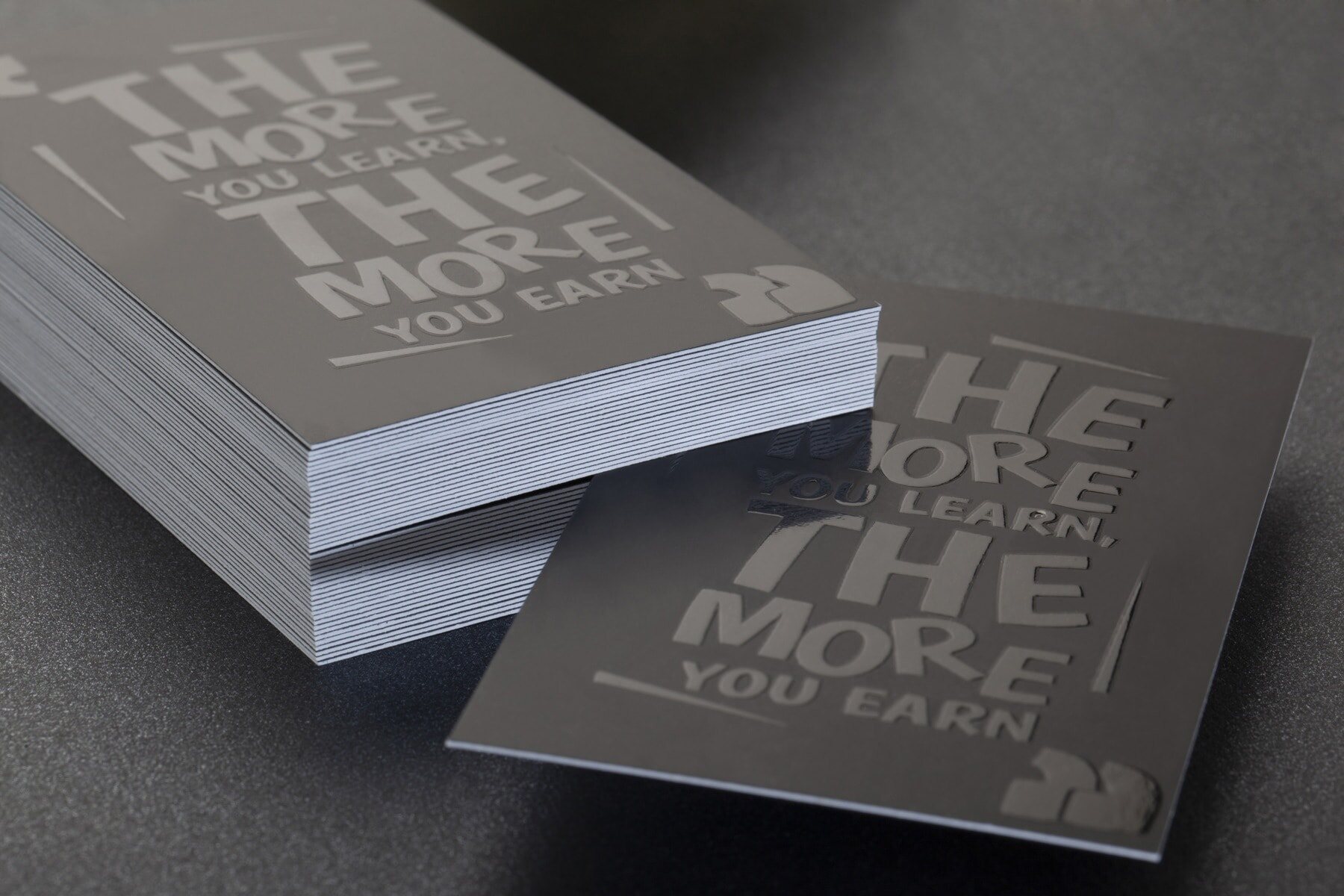
SELECTIVE
The clear coating follows a separate mask rather than covering the whole sheet.
UV CURED
Ultraviolet energy converts the applied coating into a set film.
SURFACE LED
Gloss, height and adhesion depend on the complete printed construction.
HOW IT WORKS
Clear coating placed exactly where it matters.
A separate artwork mask defines where the clear coating will appear. The coating is deposited on those selected areas and exposed to ultraviolet energy, which cures it into a stable surface film.
Spot UV can be produced by different analogue or digital systems. The available detail, height and substrate range depend on the production route, so one machine specification should not be treated as a rule for every job.
The printed ink, paper, lamination and coating must adhere as one construction. We therefore confirm the intended effect and surface before finalising artwork tolerances.
WHAT IT CHANGES
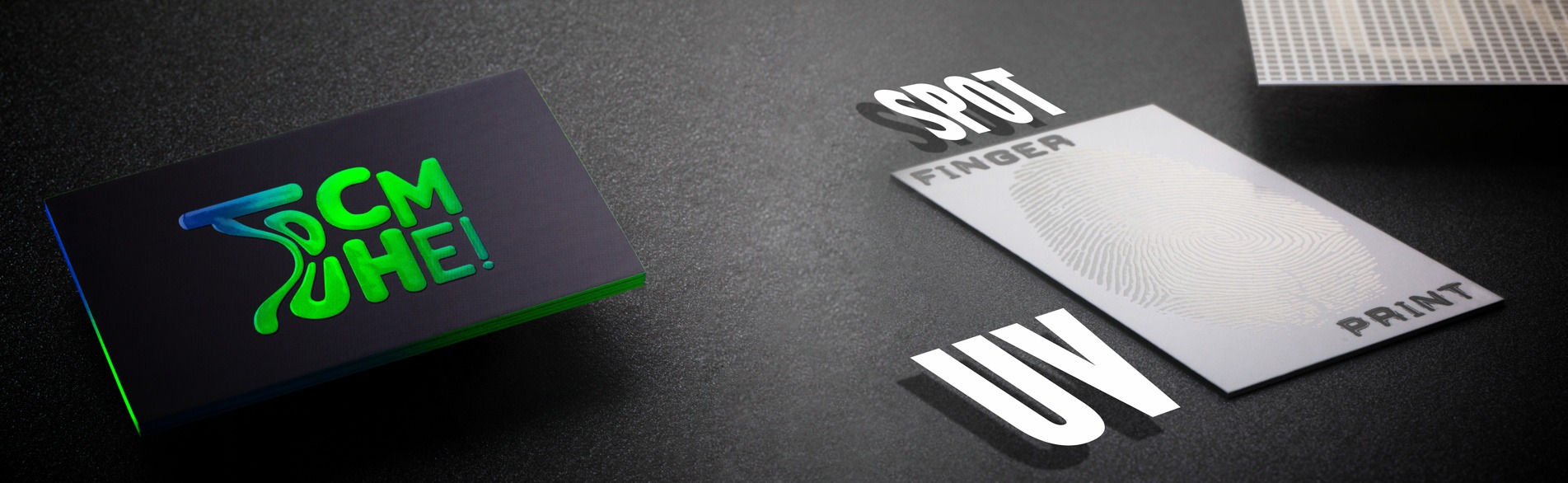
Gloss revealed by movement.
Spot UV works through contrast with the base surface, not through colour of its own.
01
Gloss contrast
A clear glossy mark becomes especially visible against a matt or dark background as the viewing angle changes.
02
Tactile build
A raised specification can add measurable surface height, but the available build depends on the selected process.
03
Precise emphasis
Patterns, symbols and selected typography can be highlighted without adding another printed colour.
WHEN TO USE IT
Best when the effect can appear gradually.
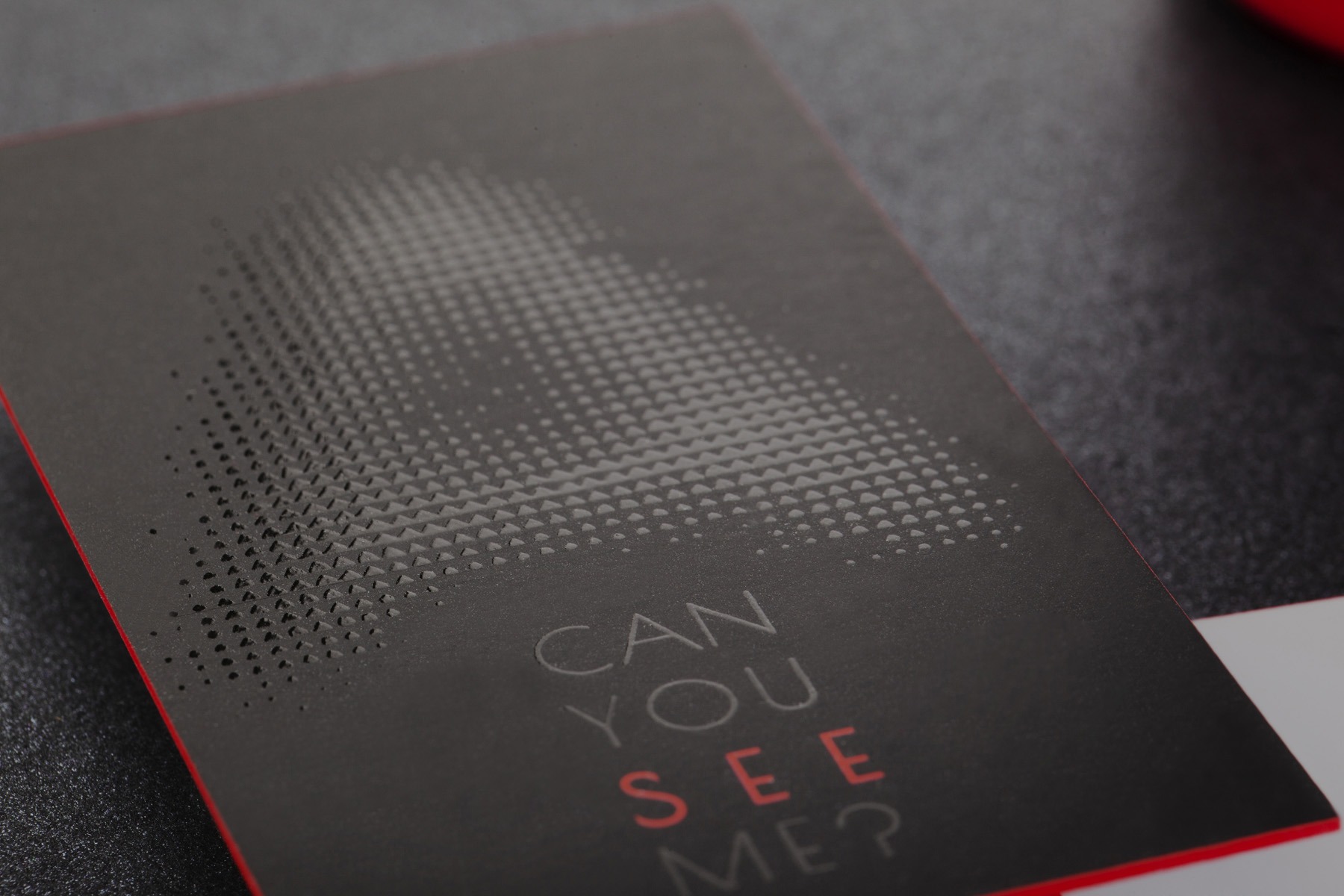
Spot UV is effective for tonal marks, repeat patterns and details that should reveal themselves in reflected light. It is strongest when the contrast with the underlying finish is deliberate.
It should not be expected to repair low-resolution artwork or make every tiny detail more legible. The clear layer still needs clean shapes, appropriate spacing and realistic registration.
CONSIDER BEFORE CHOOSING
- Paper, ink and lamination compatibility must be tested as one surface.
- Fine lines, small reverses and high-build areas have process-specific limits.
- Registration with printed artwork needs allowance for production movement.
- Two-sided or post-bond applications require an agreed finishing sequence.

ARTWORK PREPARATION
Build a separate solid UV mask.
Supply Spot UV as a clearly named spot-colour layer positioned over the final printed artwork. Use solid vector shapes where possible; do not encode the coating only as transparency or a visual effect.
Allow for trim, the safe area and registration with the printed image. Very fine positive or reversed details should be reviewed against the selected coating system before production.
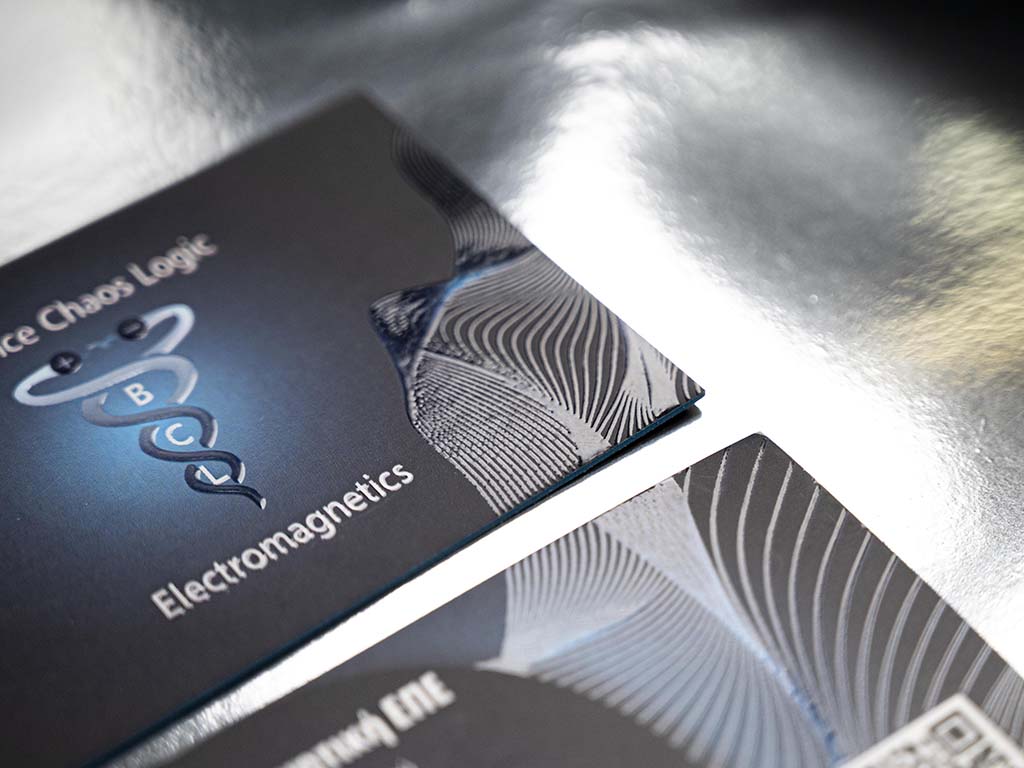
FINISHED WORK
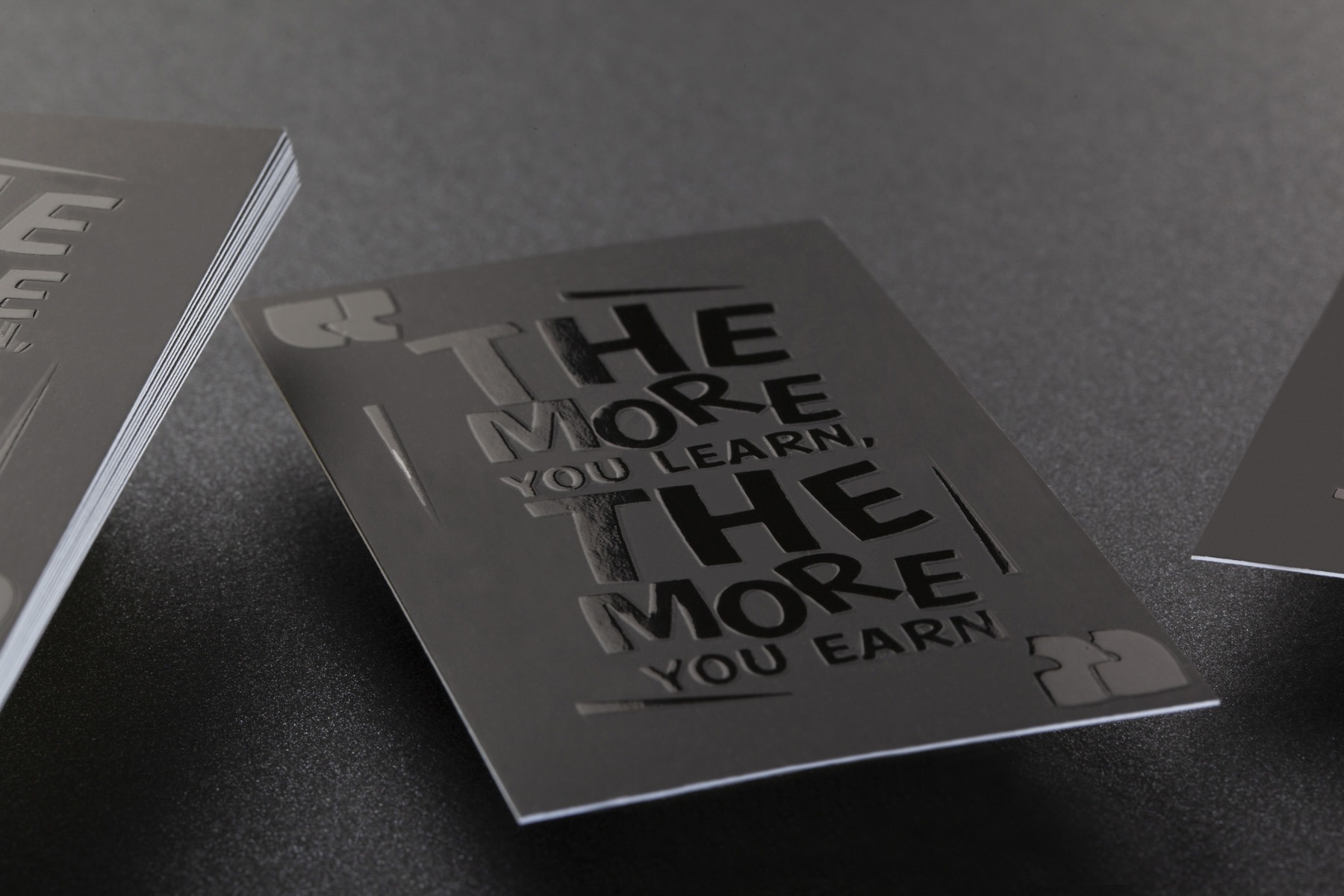
The finish appears, disappears and returns.
Dark, colourful and laminated surfaces each produce a different relationship between print and clear gloss.
CHOOSE YOUR ROUTE
Move from understanding to choosing.
Use the collection or selector for established options. Expert Recommendation is for artwork that needs the paper, process or construction narrowed first.
ONLINE SHOP
Explore Spot UV Business Cards
Review the current papers and repeatable UV configurations before choosing the effect for your artwork.
EXPERT RECOMMENDATION
Check the mask and base surface
Send the complete print file and UV layer. We will assess detail, registration and surface compatibility together.
THE LUXURY SAMPLE PACK
Spot UV needs moving light.
Use the Sample Pack to compare flat gloss, raised detail and their contrast against different surfaces.