
GUIDE
Lamination for Business Cards
Lamination bonds a thin film to one or both printed faces. The film can protect the surface, change its sheen and create a controlled base for selected finishing processes.
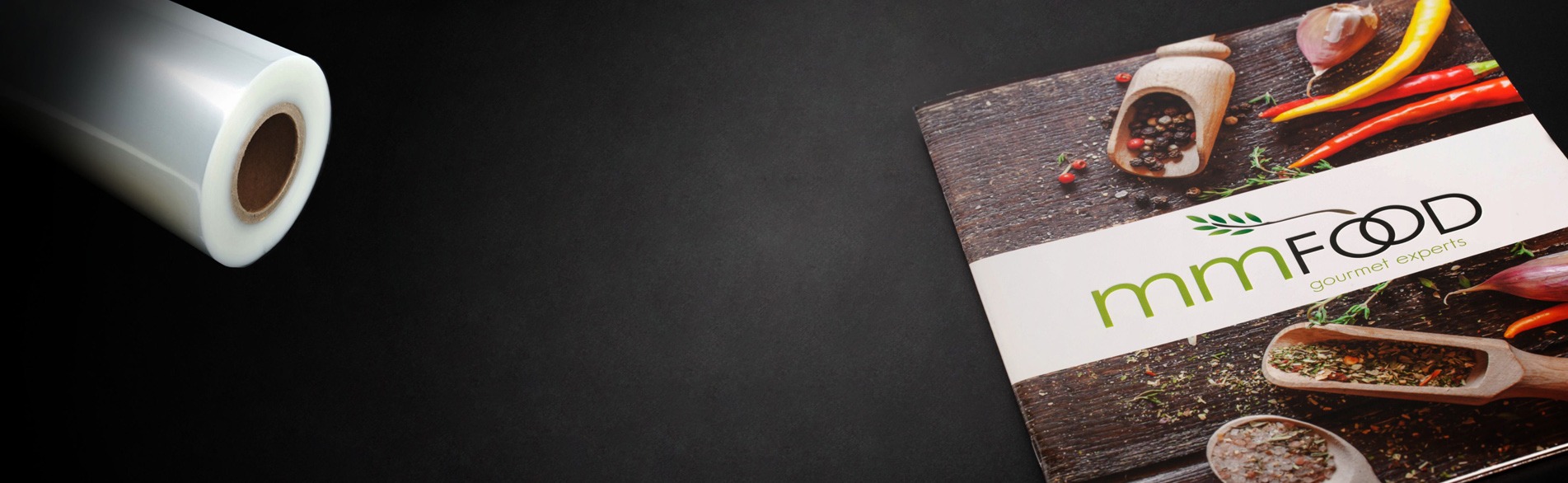
FILM LAYER
A manufactured film is bonded to the printed surface.
FINISH CHOICE
Gloss, matt and tactile character are separate from the application method.
SYSTEM MATCH
Print, adhesive, film and later finishes must remain compatible.
HOW IT WORKS
A film bonded across the printed face.
After printing and appropriate drying, a continuous film is brought into contact with the sheet and bonded through the selected adhesive system, pressure and process conditions. It may cover one face or both.
Terms such as thermal and cold lamination describe how the adhesive system is activated or applied. They do not define whether the visible finish is gloss, matt or soft-touch; surface character and application route are separate choices.
The film changes the construction that later operations must accept. Spot UV, foil, bonding, creasing and cutting are therefore checked against the exact laminate rather than assumed to be universally compatible.
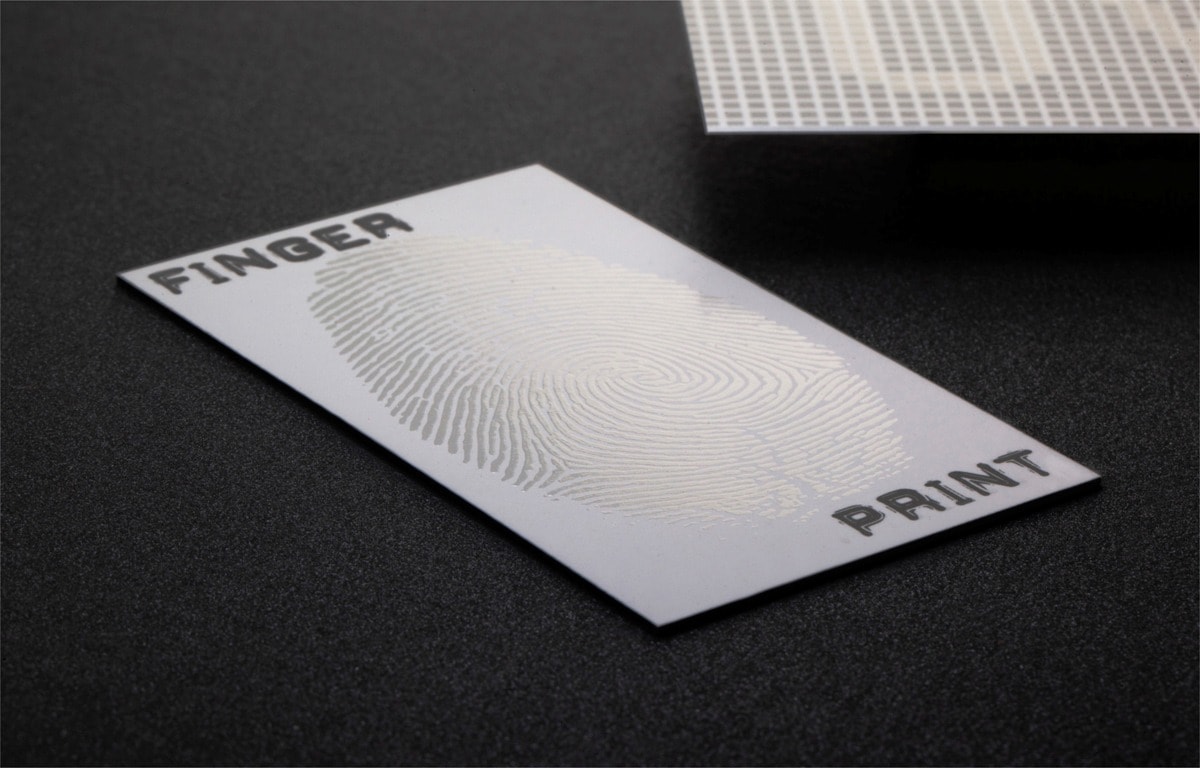
WHAT IT CHANGES
Protection, sheen and touch.
The film becomes visible through the way it reflects light, accepts handling and changes the printed colour beneath it.
01
Surface protection
A suitable laminate can add resistance to rubbing and handling, although it does not make a paper card indestructible.
02
Visual character
Gloss tends to increase reflection; matt reduces it. Tactile films introduce another surface feel that must be sampled physically.
03
Finishing base
A controlled film surface can support selected Spot UV or other finishes when the complete system has been tested.
WHEN TO USE IT
Best when the printed surface needs control.
Lamination suits full-colour cards that will be handled frequently or designs that depend on a deliberate matt, gloss or tactile face. It can also create contrast with a selective clear finish.
It is not automatically required for a premium card. An uncoated special paper may be more expressive without film, while a laminated coated board may be the right base for vivid photography and gloss contrast.
CONSIDER BEFORE CHOOSING
- Film can alter colour, black density and the way a surface reflects light.
- The cut edge still exposes the underlying paper construction.
- Foil, Spot UV, bonding and folding compatibility depends on the exact laminate.
- The material choice should account for the intended use and disposal route.
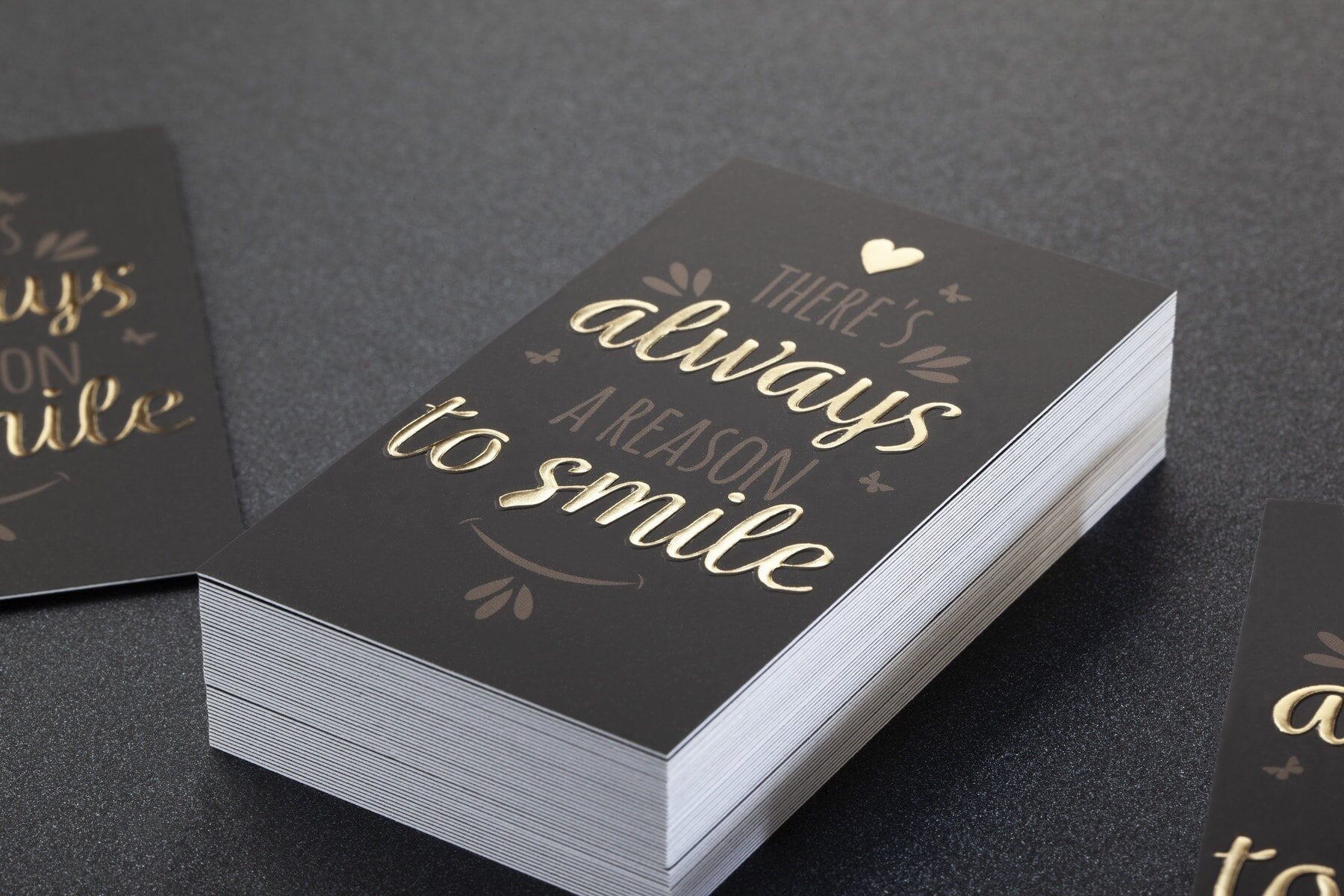
ARTWORK PREPARATION
Prepare the print first, then name every finish.
Lamination normally covers the selected face, so it does not require a decorative artwork mask. Prepare the printed file with the correct bleed, resolution and colour setup.
If Spot UV, foil or another selective process follows lamination, place that effect on its own clearly named layer. Tell us which face receives each finish so the production sequence can be checked.
FINISHED WORK
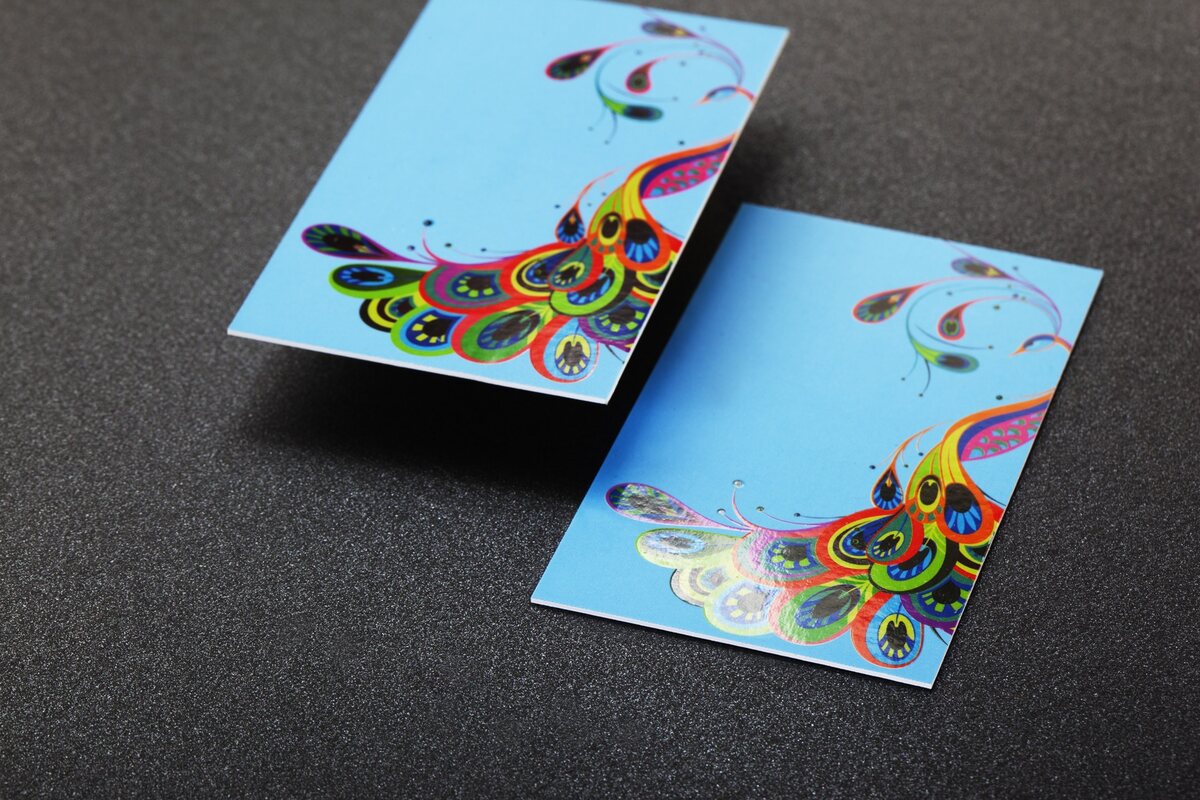
A base for contrast—or a finish in itself.
The most appropriate film supports the paper, image and later processes without making the surface feel generic.
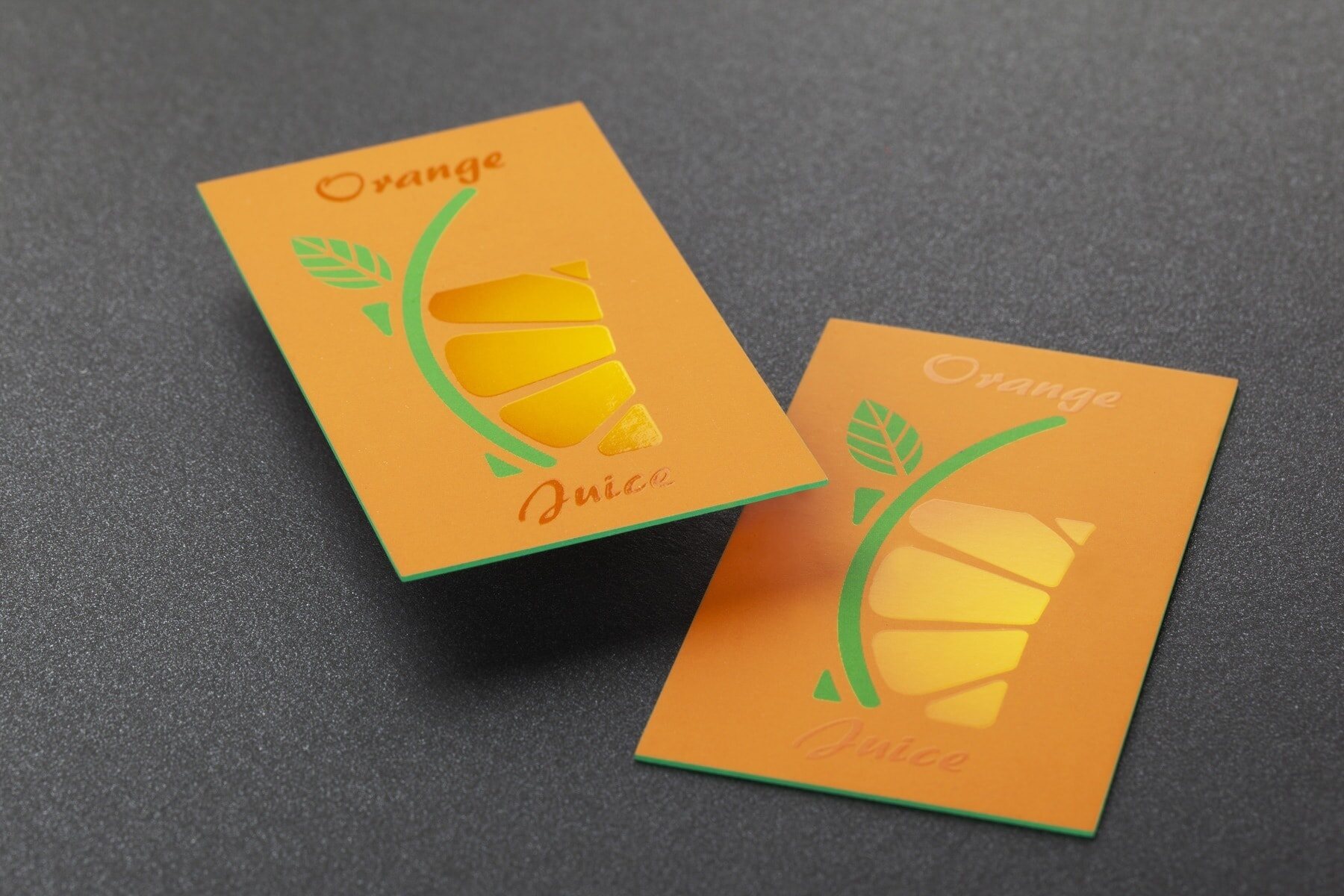

CHOOSE YOUR ROUTE
Move from understanding to choosing.
Use the collection or selector for established options. Expert Recommendation is for artwork that needs the paper, process or construction narrowed first.
SELECTOR
Explore Business Card Options
Start with the broad card selector, then compare the surface and construction choices available for your design.
EXPERT RECOMMENDATION
Choose the film with the later finishes
Send the artwork and intended feel, including any Spot UV or foil. We will check the complete surface system.
THE LUXURY SAMPLE PACK
Matt, gloss and touch belong in your hand.
Use the Sample Pack to compare laminated and uncoated surfaces before choosing the character of your card.