
GUIDE
Painted Edges Process
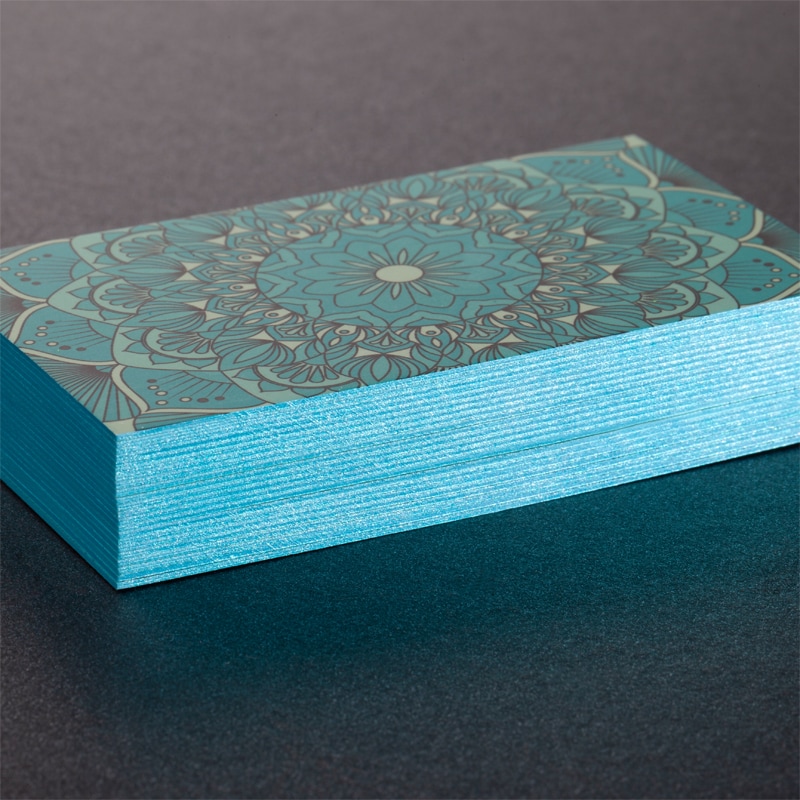
The painted edges process turns the thickness of a business card into a visible design element. Edge colour can echo a brand, create a sharp contrast or add a controlled metallic accent.
EDGE ONLY
Colour is applied to the exposed perimeter of the finished card.
THICKNESS SHOWS
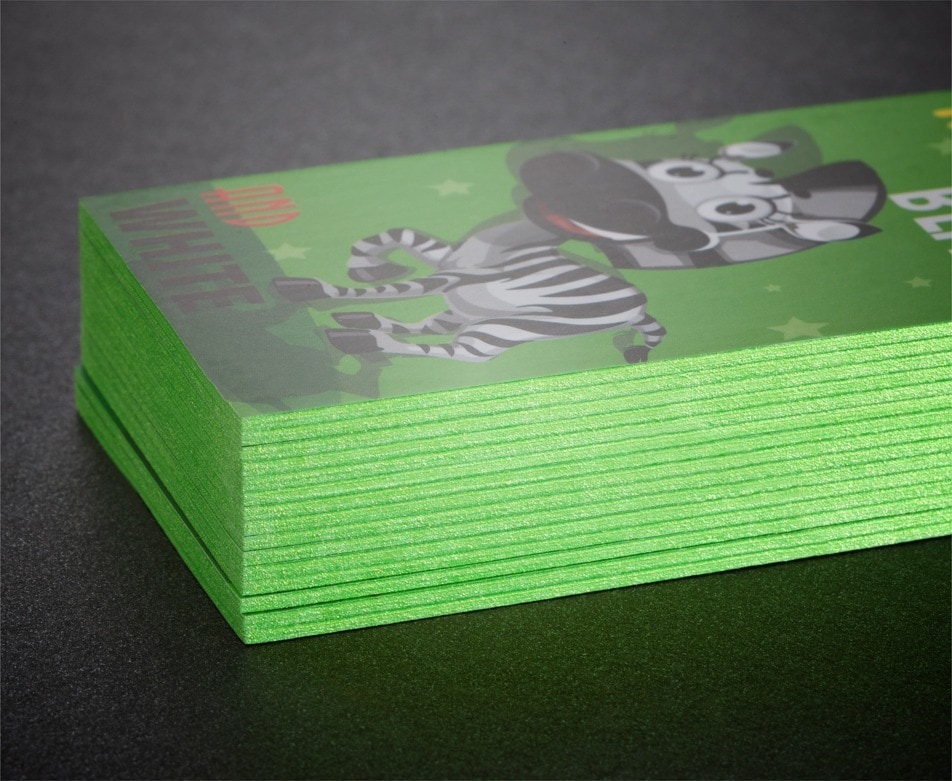
A substantial board gives the colour more visible surface.
JOB SPECIFIC
Paper, coating and target colour are evaluated together.
HOW IT WORKS
How the painted edges process works.
During the painted edges process, printed cards are trimmed and aligned into a compact block so their exposed edges form one controlled surface. The faces are protected while colour is applied to the perimeter and allowed to set before the stack is released.
The exact application, preparation and drying sequence depends on the board, the colour system and the other finishes in the job. Edge painting is therefore a production decision, not a universal final step that behaves identically on every card.
Absorbent papers, laminated faces and bonded constructions accept and display colour differently. We evaluate the complete specification before confirming the edge finish.
WHAT IT CHANGES
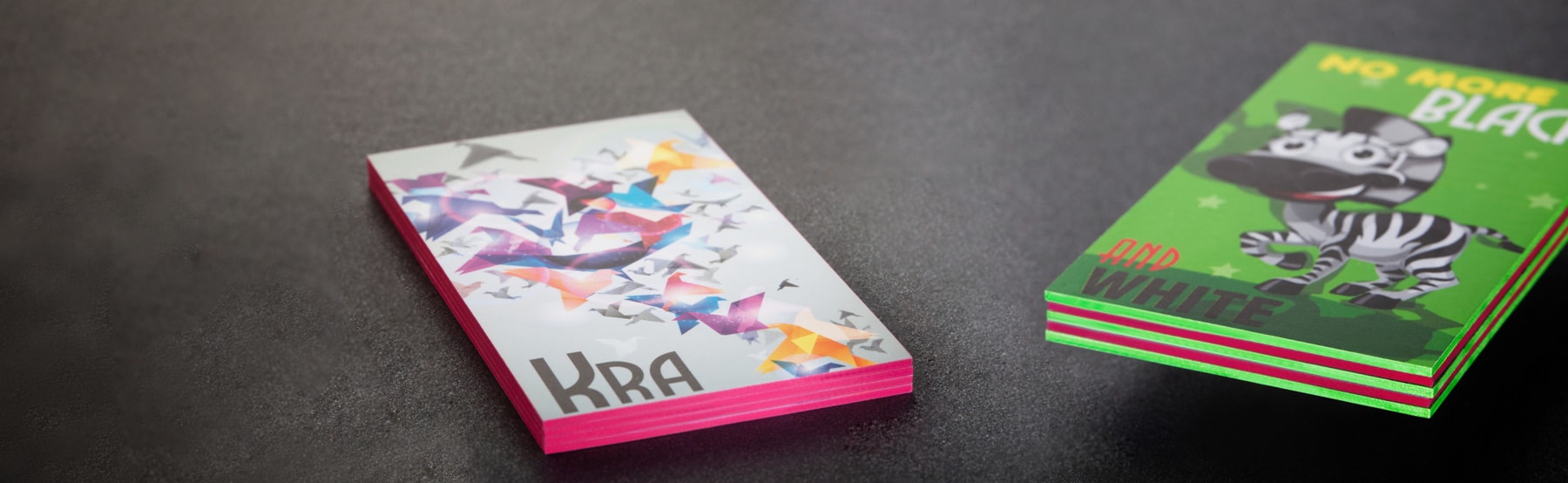
Colour visible before the card is read.
The edge can remain a small surprise or become the strongest graphic signal in a stack.
01
Brand continuity
A carefully chosen edge can repeat a colour from the identity without adding more information to either face.
02
Material contrast
Bright or metallic colour can interrupt a black, white or natural board with a fine line around the card.
03
Stack presence
The effect becomes more visible when several cards sit together, making thickness and colour read as one object.
WHEN TO USE IT
Best when thickness already has a role.
Use the painted edges process when the perimeter should act as a third design surface. It works particularly well with simple front-and-back layouts on duplex, triplex and other substantial constructions.
A thin edge can still be coloured, but it will not have the same visual weight. Colour appearance also changes with the base stock and should be approved as a physical production reference.
CONSIDER BEFORE CHOOSING
- The final board thickness determines how prominently the colour appears.
- Absorbency and surface coating influence coverage and edge sharpness.
- Metallic and bright colours do not reproduce reliably from an ordinary screen preview.
- Rounded corners, lamination and bonded layers require an agreed finishing sequence.
ARTWORK PREPARATION
Specify the edge outside the face artwork.
Prepare the front and back normally with the required bleed and safe area. Edge colour is a production specification rather than another printed layer on the face.
Provide a named target colour or physical reference and show any relationship it must have with printed ink or foil. We will assess the match on the chosen board rather than promise that an on-screen swatch will be exact.
Pantone also cautions that on-screen colour simulations may not match physical colour standards. A recent physical reference and the chosen board still need production assessment.
FINISHED WORK
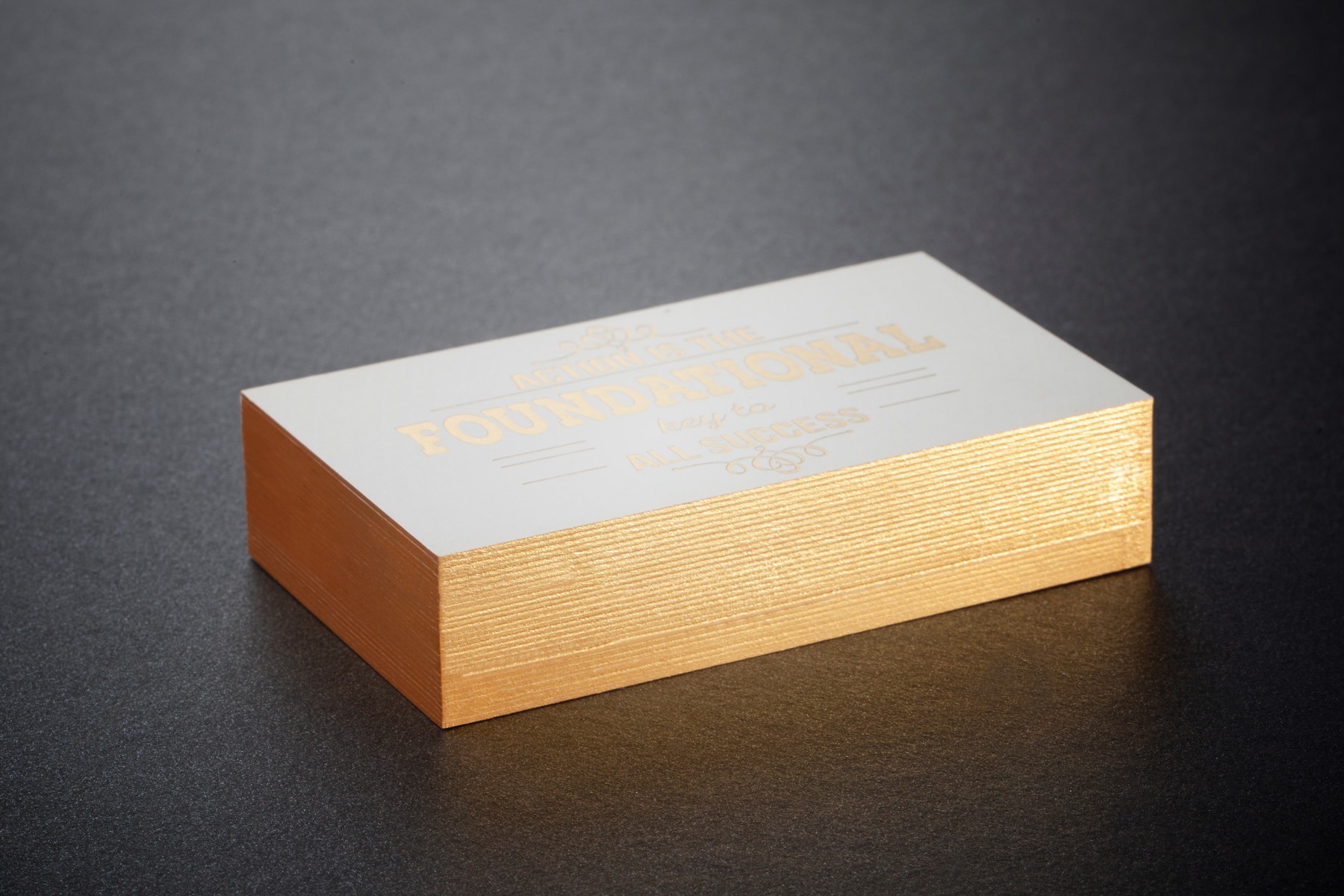
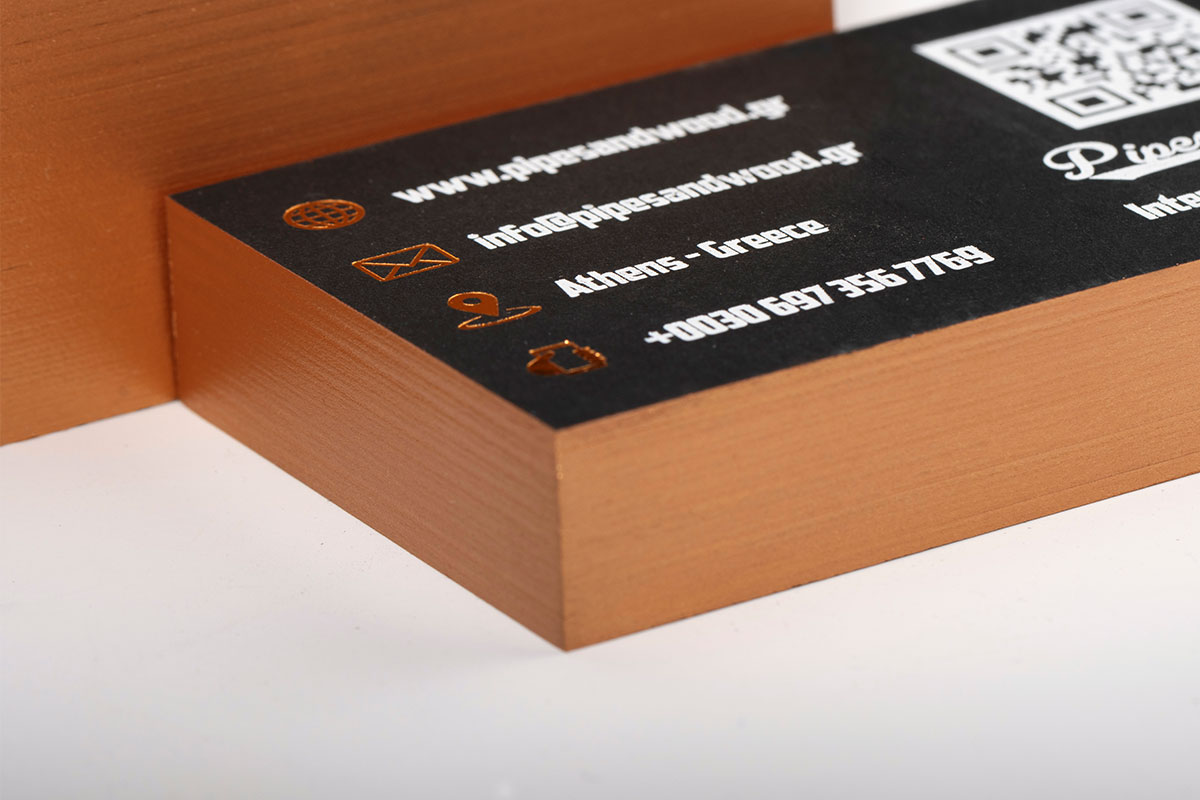
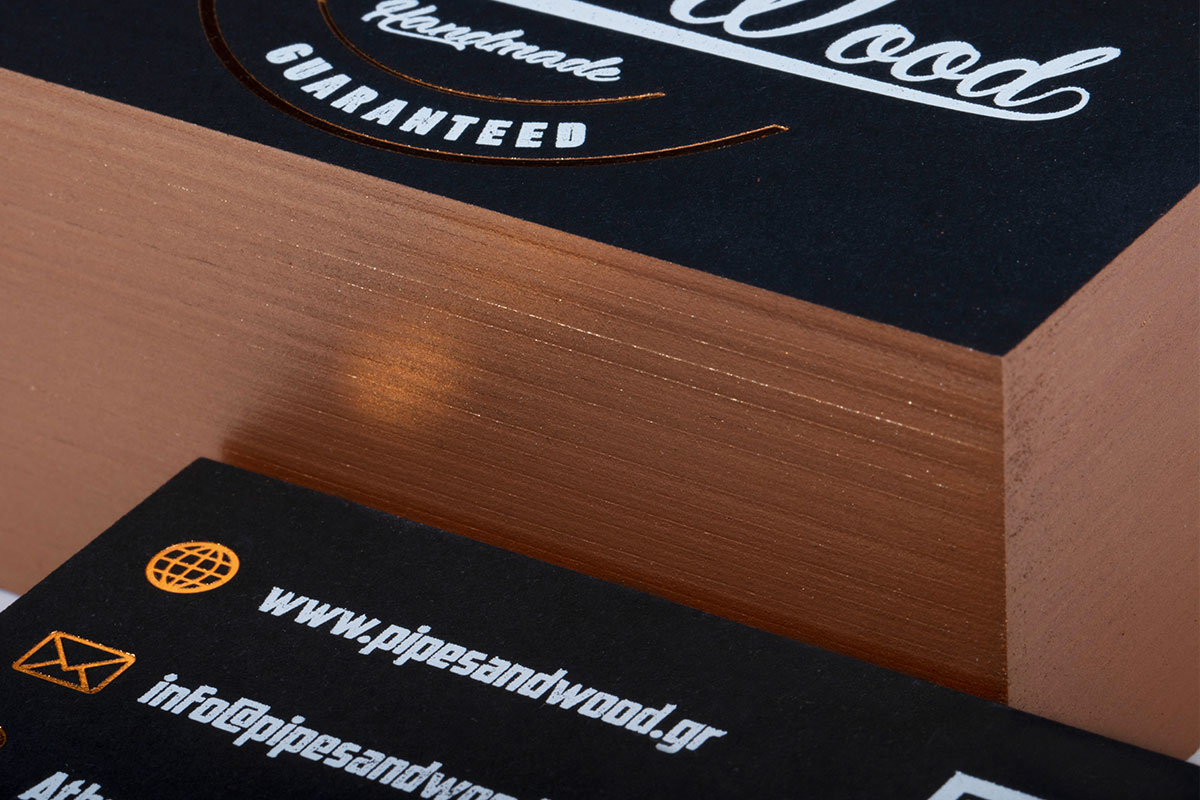
A narrow surface with strong impact.
Colour, thickness and the face design should feel intentional from every angle.
CHOOSE YOUR ROUTE
Move from understanding to choosing.
Use the collection or selector for established options. Expert Recommendation is for artwork that needs the paper, process or construction narrowed first.
ONLINE SHOP
Explore Painted Edges Business Cards
Compare repeatable papers and configurations, then review the visible edge-colour options before ordering.
EXPERT RECOMMENDATION
Match the colour to the construction
Send the artwork, board choice and target colour. We will check whether the complete finish sequence is practical.
THE LUXURY SAMPLE PACK
An edge colour is a physical colour.
Use the Sample Pack to compare bright, dark and metallic edges on real card constructions.