
GUIDE
Duplex and Triplex Business Cards
Duplex cards bond two sheets into one construction; triplex cards use three. The layers can add thickness, combine different faces or reveal a contrasting colour at the edge.

DUPLEX
Two paper or board layers are bonded into one card.
TRIPLEX
A third layer can add thickness or a contrasting core.
CUSTOM BUILD
Faces, core and finishing order are selected for the complete job.
HOW IT IS BUILT
Separate sheets become one construction.
Duplexing bonds two compatible sheets back to back. Triplexing adds a third layer between them. The papers may match or deliberately differ in colour, texture or printable surface.
Printing and specialist finishing can happen before or after bonding according to the process, machinery and effect required. The bonded sheets are held under controlled pressure and then trimmed as one finished board.
There is no single duplex or triplex recipe. Total thickness, grain, moisture response and adhesive compatibility are considered together so the card remains clean, flat and accurately aligned.

WHAT IT CHANGES
Thickness with more than one purpose.
Layering can solve a production problem as elegantly as it creates a visual effect.
01
Two distinct faces
A smooth printed face can be paired with a textured or coloured reverse when the chosen stocks bond reliably.
02
A visible core
A contrasting middle sheet creates a continuous line of colour around a triplex card without painting the edge.
03
Independent finishing
Layers can help isolate a deep impression or allow each side to receive a process suited to its own surface.
WHEN TO USE IT
Best when the construction carries the idea.
Choose a layered card when you need more substance, two different outer surfaces or a core colour that belongs to the identity. The build should have a reason beyond simply quoting a larger gsm number.
Duplex and triplex cards can be combined with foil, letterpress, embossing, Spot UV, edge colour and rounded corners. Compatibility and sequence are checked for the chosen papers rather than ruled out as a category.
CONSIDER BEFORE CHOOSING
- The final thickness must suit the intended press, cutting and finishing operations.
- Different stocks can react differently to adhesive, moisture and grain direction.
- Deep impressions and embossing may influence the opposite layer or bonding sequence.
- Rounded corners and edge finishing are applied to the completed construction when appropriate.
ARTWORK PREPARATION
Design both faces—and the edge.
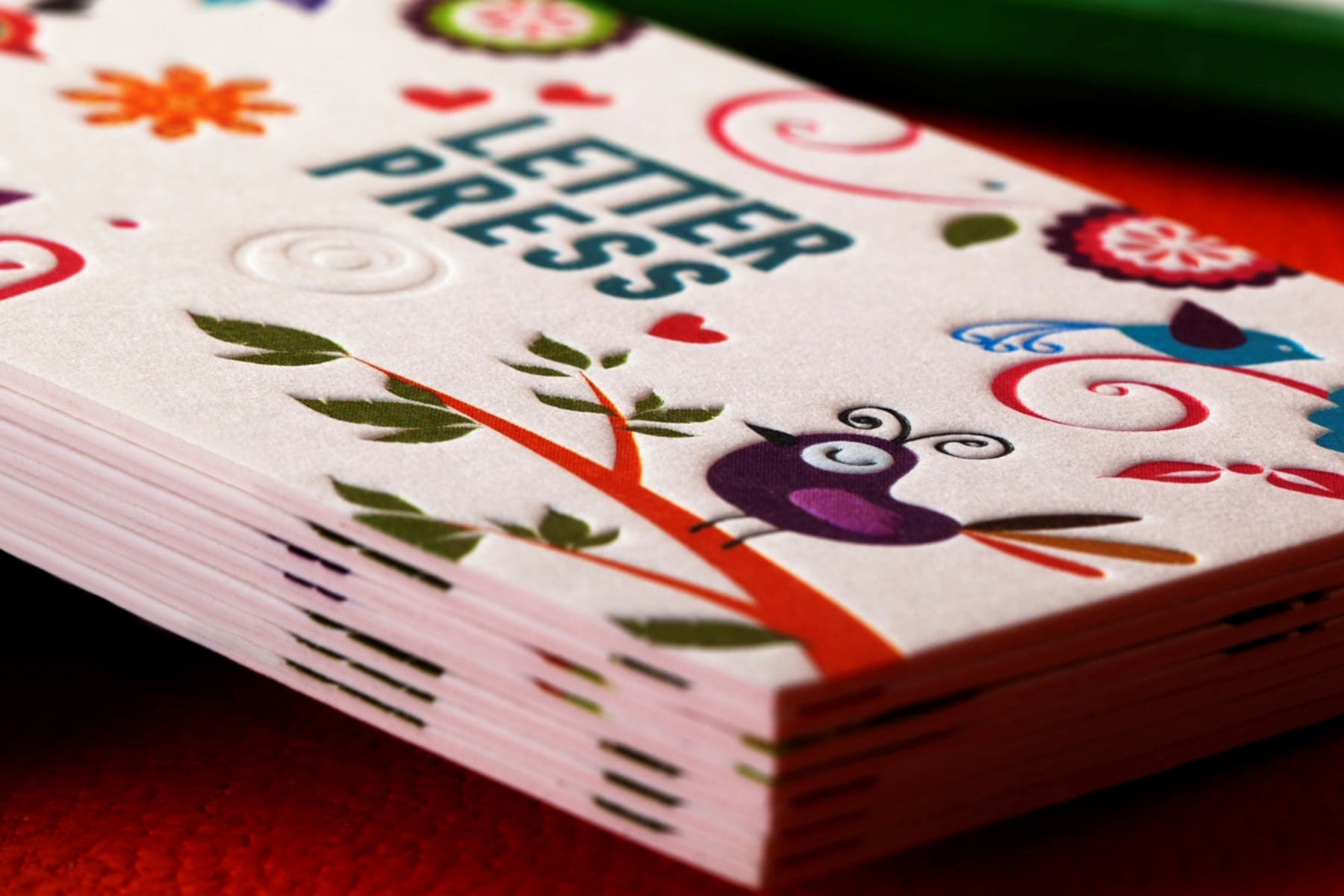
Supply front and back artwork as clearly identified pages at the same finished size. Put foil, letterpress, embossing or Spot UV elements on separate named layers.
If the middle sheet is a brand colour, specify it as part of the construction rather than as face artwork. Allow for trim and safe areas, and avoid relying on perfect edge alignment between unrelated patterns on separate layers.
FINISHED WORK
The edge explains how the card is made.
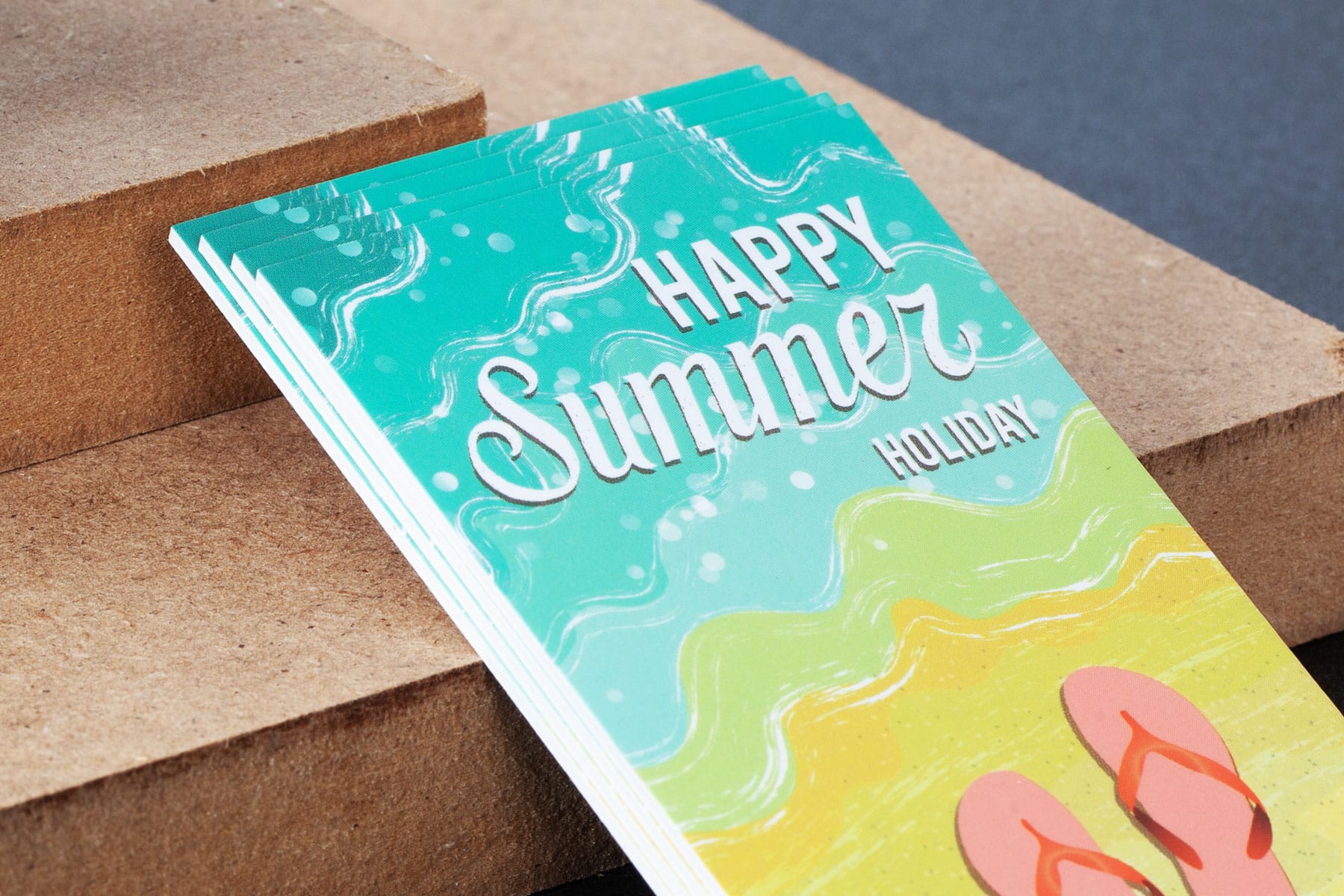
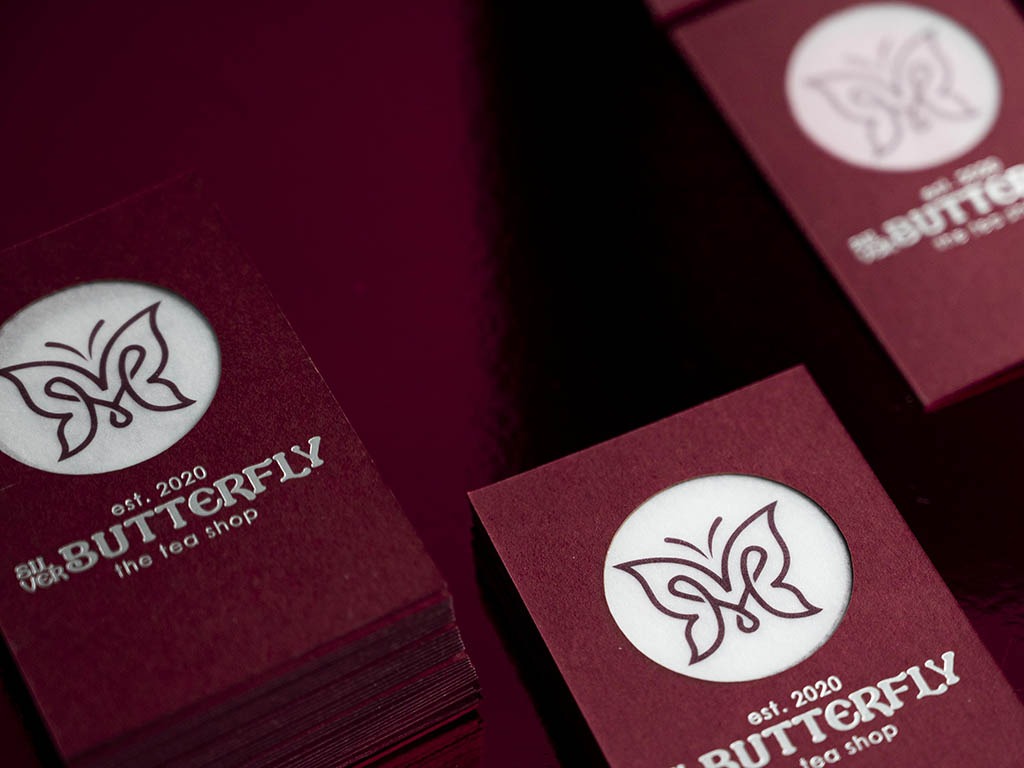
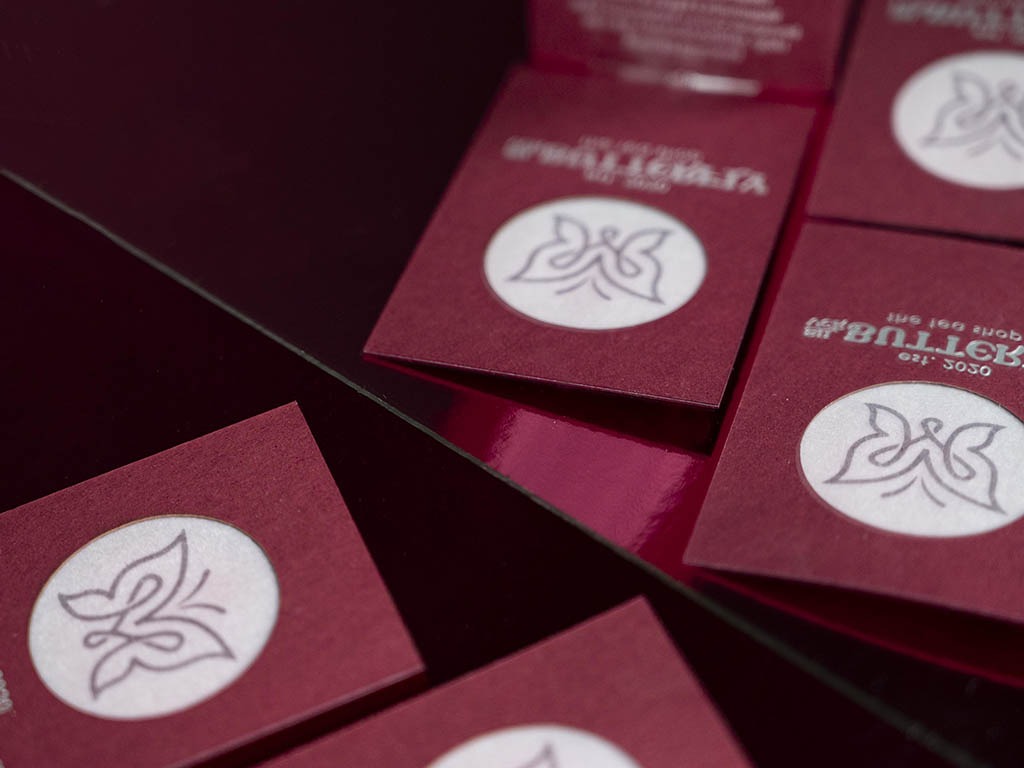
Matching layers feel monolithic; contrasting layers make the construction visible.
CHOOSE YOUR ROUTE
Move from understanding to choosing.
Use the collection or selector for established options. Expert Recommendation is for artwork that needs the paper, process or construction narrowed first.
COLLECTION
Explore Luxury Business Cards
See the broader range of substantial papers and crafted finishes available through the current collection.
EXPERT RECOMMENDATION
Build the card around the artwork
Share both sides, the desired thickness and any core colour. We will narrow the compatible layer and finishing options.
THE LUXURY SAMPLE PACK
Thickness makes more sense in the hand.
Compare single-board, duplex and triplex constructions in the Sample Pack before choosing the build.