
TECHNIQUE GUIDE
Hot Foil Printing
Hot foil printing uses a metal die, heat and pressure to transfer an opaque foil finish to the card. The result can catch the light like polished metal, sit quietly as a satin detail or add a solid pigment colour where ink would behave differently.

TRANSFER
Heat and pressure release the selected coating from a carrier film.
TOOLING
A metal die carries the artwork and defines the stamped area.
CHARACTER
Opaque colour, reflected light and a subtly pressed surface.
HOW IT WORKS
How hot foil printing transfers the image.
Hot foil stamping uses an etched or engraved metal die made from the supplied artwork. The die is heated and pressed through a roll of stamping foil onto the paper or board.
Heat helps the image layer release from its carrier; pressure brings it into clean contact with the surface; an adhesive layer bonds the transferred image to the stock. The carrier film lifts away and only the selected foil image remains.
The working temperature, pressure and dwell time are calibrated for the foil grade, paper, coverage and level of detail. There is no single setting that correctly describes every job.
For a supplier-side explanation of the carrier, release, image and adhesive layers, see Foilco’s guide to stamping-foil structure.

WHAT IT CHANGES
Light, opacity and touch.
The effect depends on the chosen foil, the surface beneath it and the artwork—not on a generic list of colours.
01
Opaque contrast
The right foil grade can remain clear and deliberate on pale, coloured or very dark stocks where ordinary ink may lose intensity.
02
Controlled reflection
Bright metallic, satin, sheen and pigment finishes respond differently to light. A current physical swatch is more useful than an on-screen colour.
03
A pressed surface
The stamping pressure can leave a subtle impression in the paper. Its visibility varies with the stock, artwork and setup; it is not the same process as deep blind letterpress.
WHEN TO USE IT
Best when the detail earns attention.
Hot foil is strongest when it gives hierarchy to a wordmark, monogram, name, fine border or restrained graphic element. It can also make a dark or deeply coloured paper practical without covering the whole card in printed ink.
It works especially well when the material and foil are allowed to share the composition. More foil is not automatically more luxurious.
CONSIDER BEFORE CHOOSING
- Each foil colour and each printed side is normally a separate stamping operation and may require separate tooling.
- Hairlines, very fine reverses and large solid areas behave differently and may need artwork adjustment or a production test.
- Registration with ink, embossing or a second foil requires realistic tolerances.
- The paper surface, foil grade and intended coverage must be evaluated together.
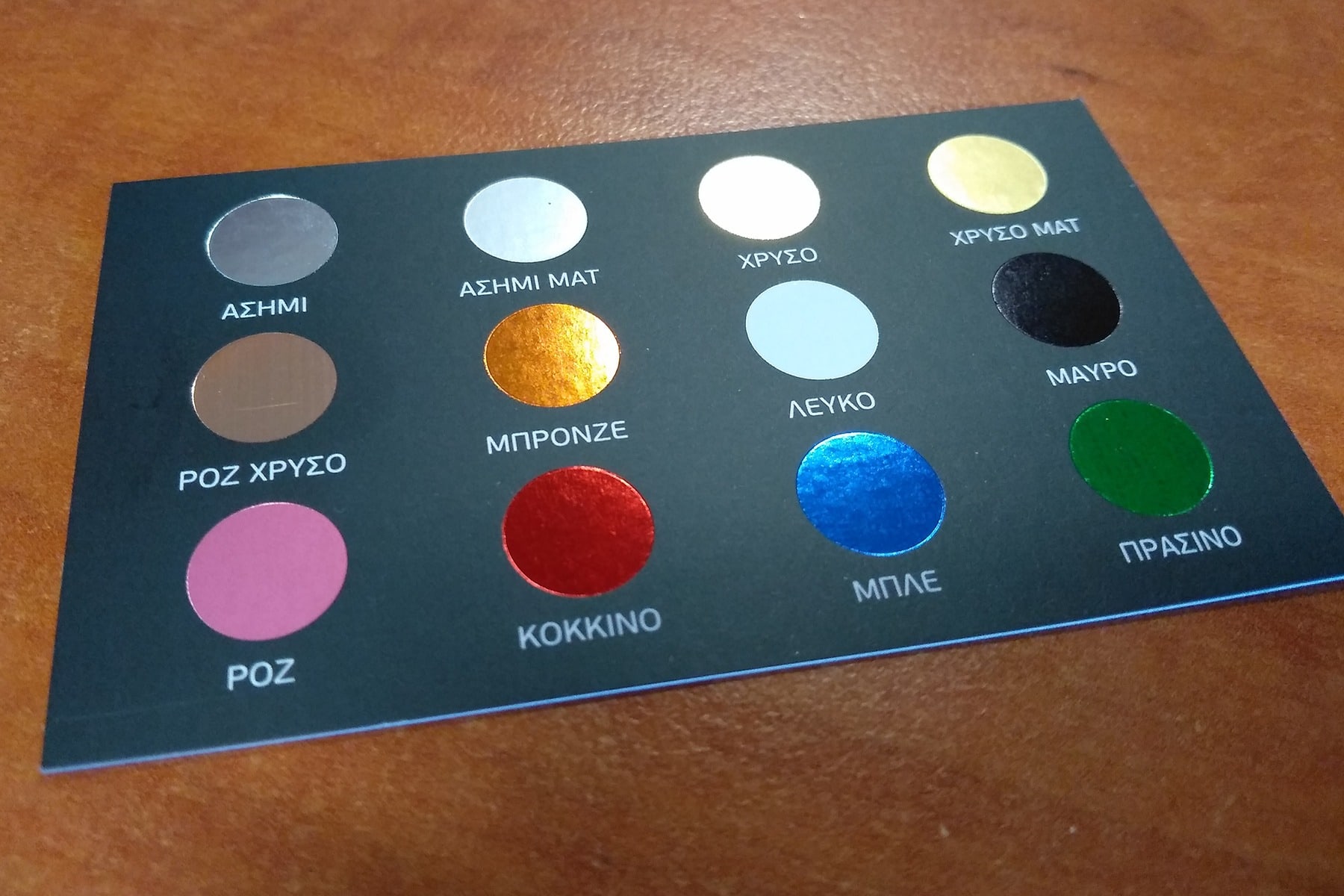
ARTWORK PREPARATION
Build each foil as a solid plate.
Supply foil artwork as clean vector shapes in a separate, clearly named spot-colour layer. A foil plate is solid: tints, photographic shading and gradients are not reproduced by the stamping plate itself.
Keep type outlined or include the required fonts. Allow for trim and the safe area, and do not assume that the smallest detail visible on screen will stamp cleanly on every paper. We review line weight, negative space, coverage and registration before production.
FINISHED WORK
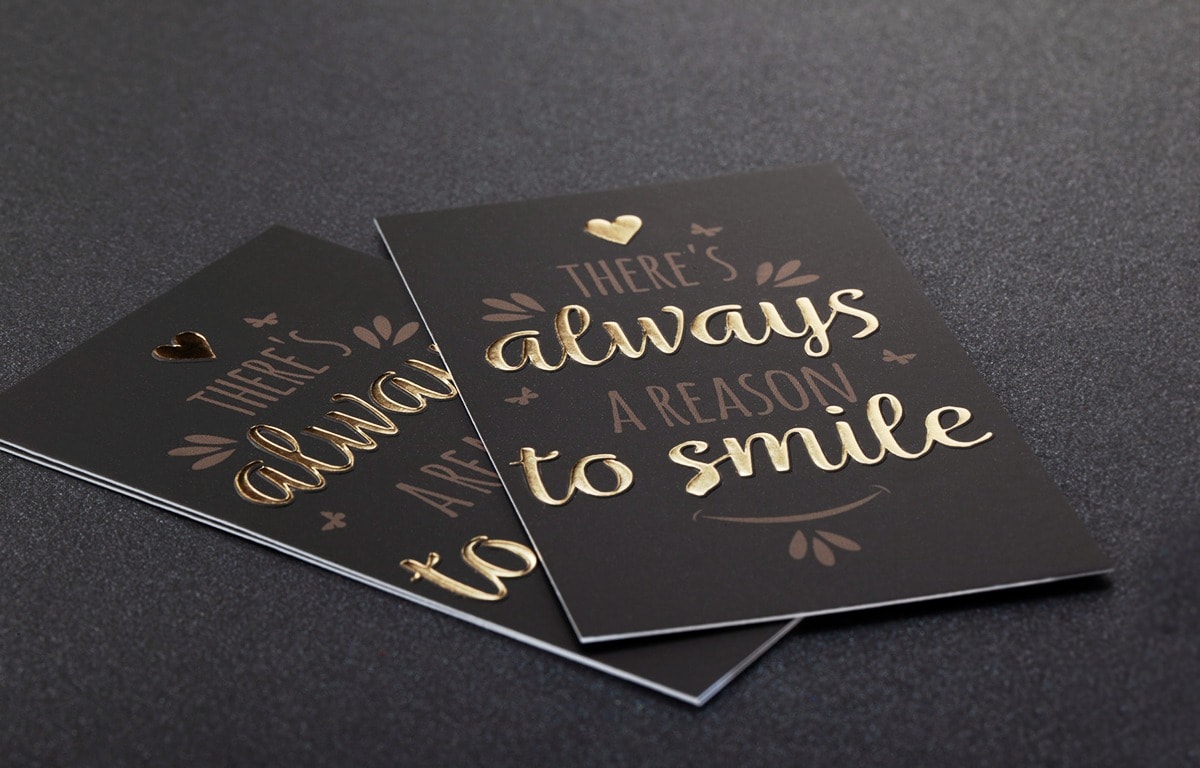
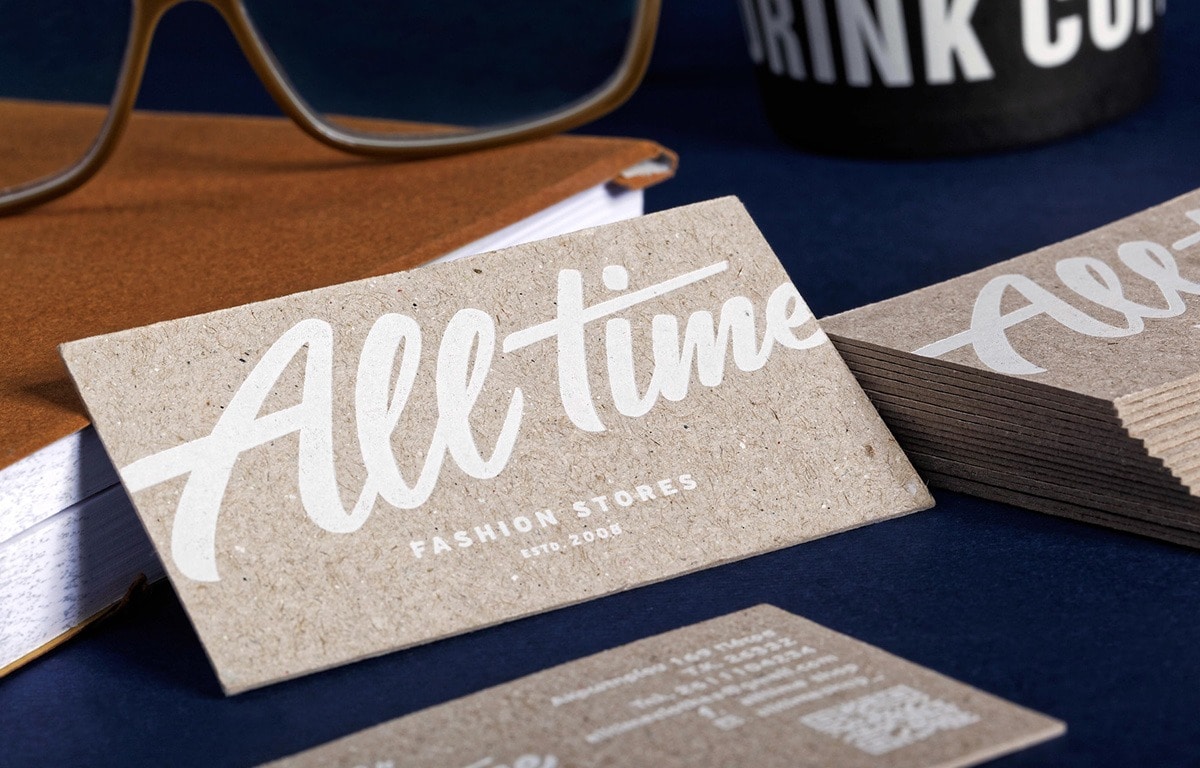
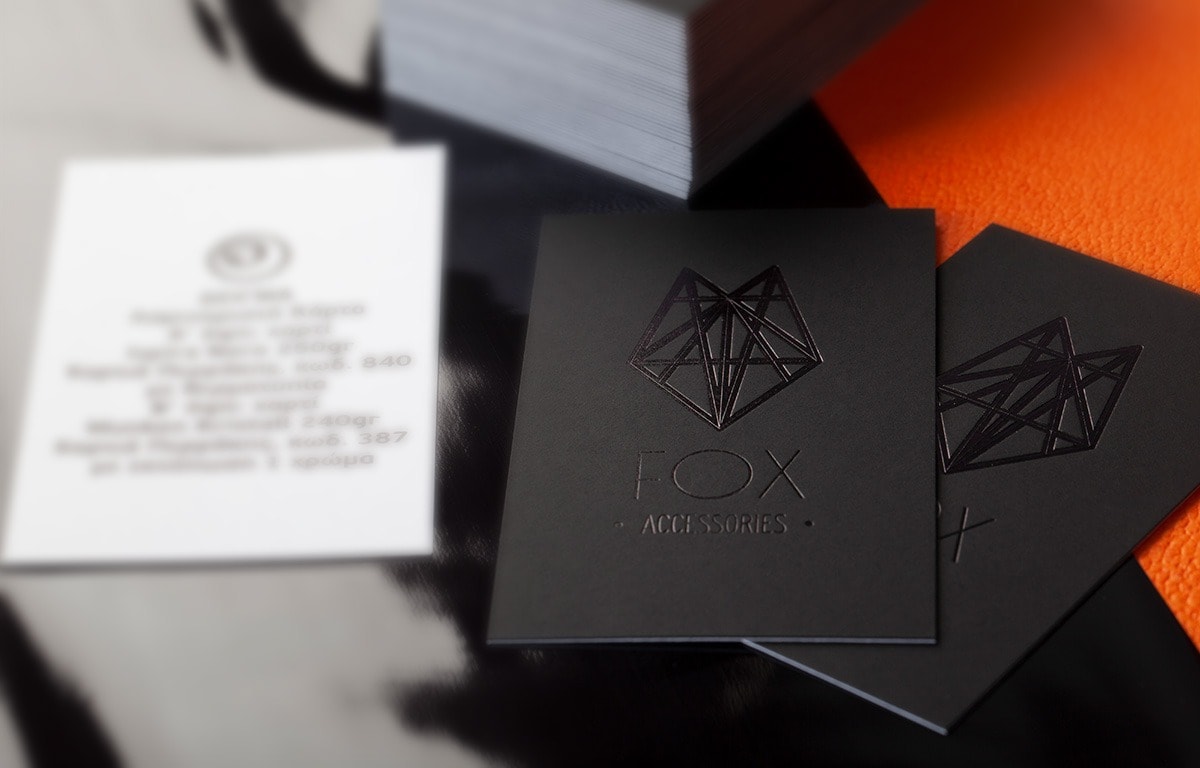
One process. Very different voices.
Hot foil printing can feel quiet, graphic or richly decorative; surface, colour and restraint decide which character comes forward.
CHOOSE YOUR ROUTE
Move from understanding to choosing.
The commercial collection shows what can be ordered. Expert Recommendation is for artwork that needs the practical options narrowed first.
ONLINE SHOP
Explore Hot Foil Business Cards
Compare the available papers and repeatable configurations, then review every visible option before ordering.
EXPERT RECOMMENDATION
Start with the artwork
Send the design, quantity and intended impression. We will narrow the practical paper, foil and production combinations with you.
THE LUXURY SAMPLE PACK
Foil should be judged in your hand.
Compare reflection, opacity, paper texture and impression under real light before choosing the finish for your own card.