
DESIGN STUDY · BUTTERFLY
Butterfly: A Laser-Cut Triplex Business Card
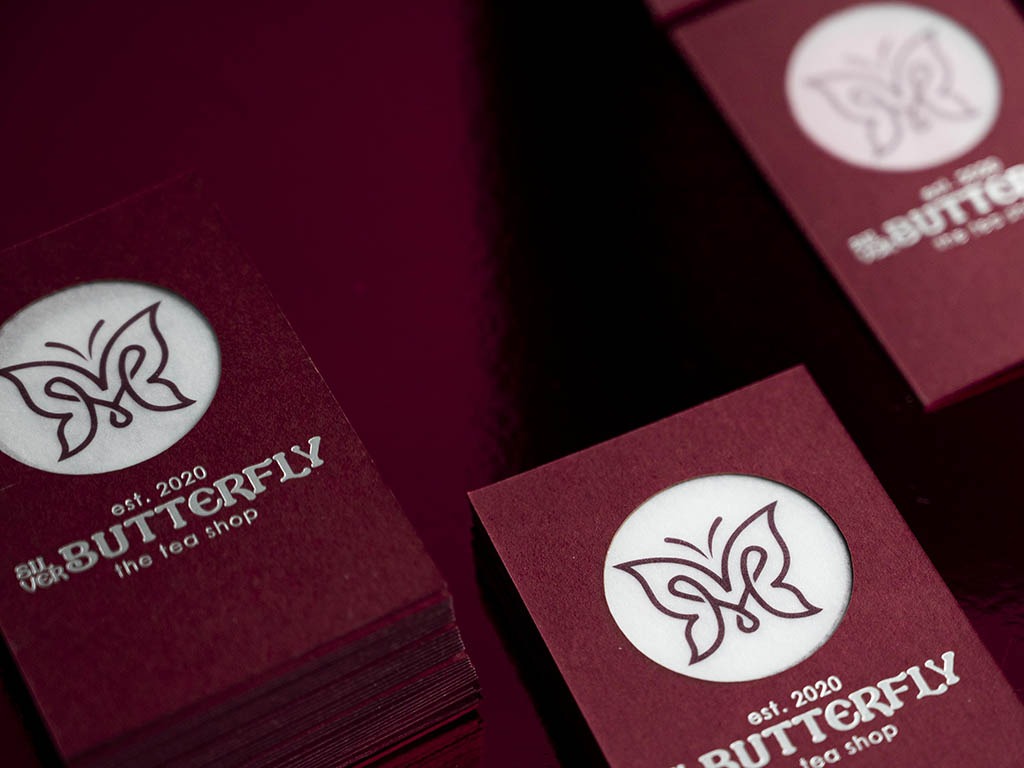
An Offsetcards house sample combining Keaykolour Carmine, matt silver hot foil, a Pantone-printed translucent centre and an internal laser-cut window.
EXACT SPECIFICATION
A translucent printed image revealed through two aligned outer-paper windows.
- Sector
- Offsetcards house sample
- Paper
- Keaykolour Carmine 300 gsm outer sheets; Curious Translucents Clear 160 gsm centre
- Thickness
- Triplex: 300 + 160 + 300 gsm before bonding
- Hot foil
- Matt silver hot foil on both outer faces
- Centre print & laser cut
- One Pantone colour on the translucent centre; circular internal laser-cut window
- Corners and edge
- Square corners; unpainted Triplex edge
THE STUDY QUESTION
Can a translucent printed image become part of a substantial coloured card?
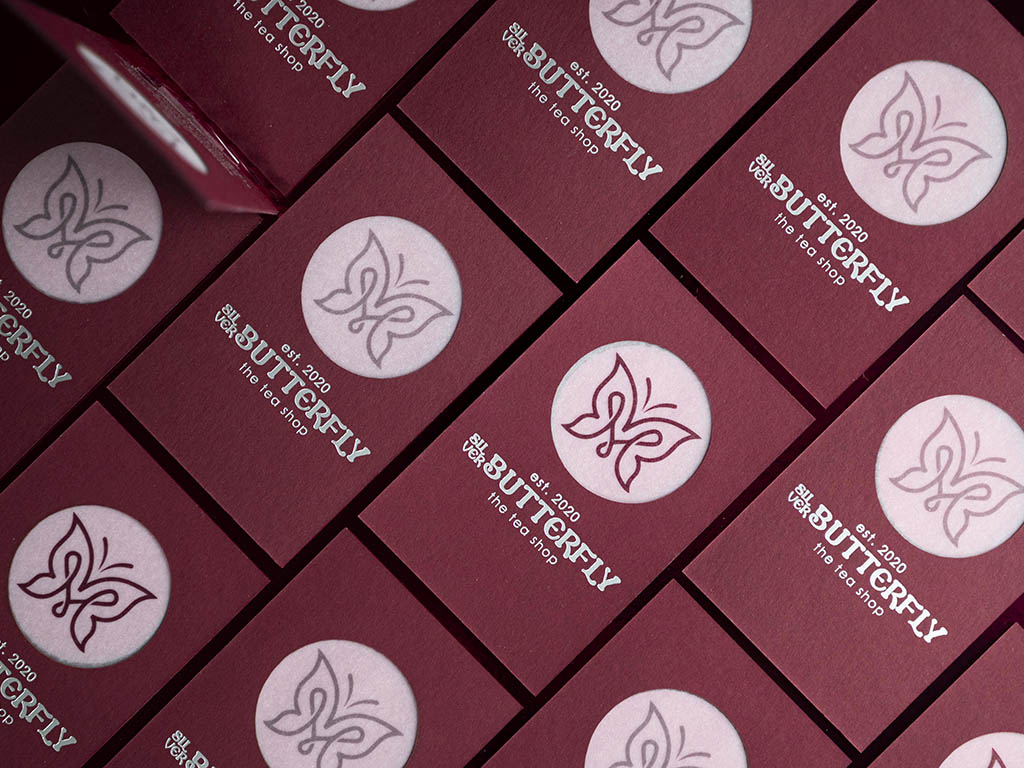
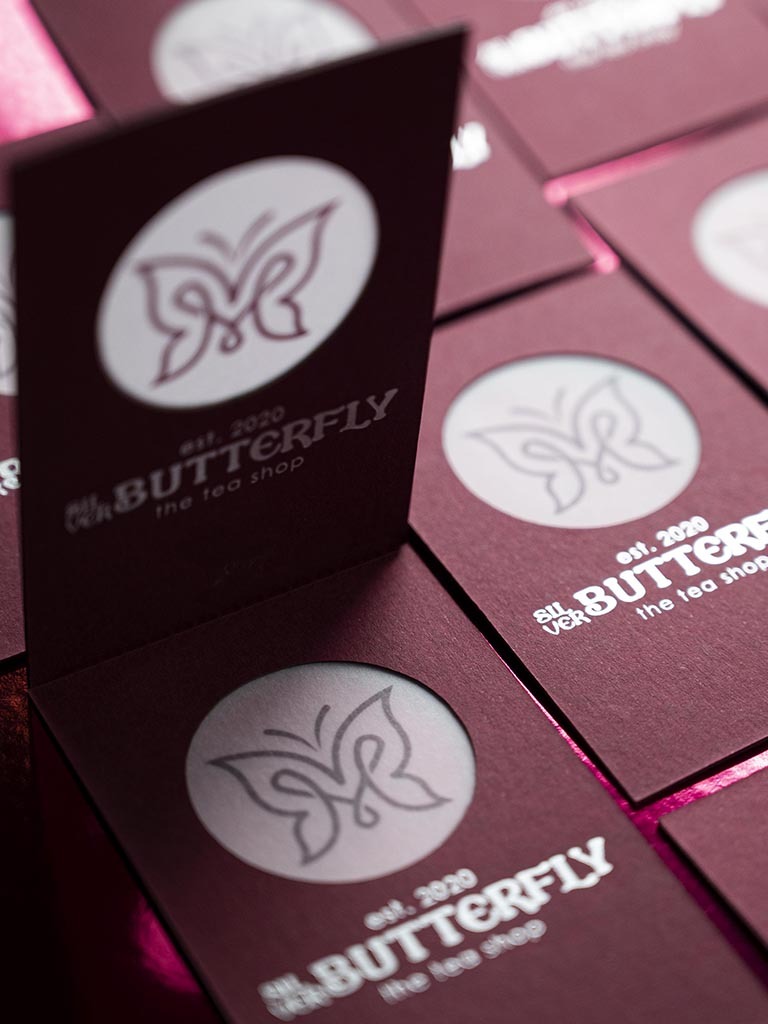
The Butterfly sample was designed to make the middle sheet visually active. Instead of using a third layer only to add an edge colour, the outer papers are cut away so the printed translucent centre becomes the focal point.
A house sample—not a client attribution
Butterfly Tea Shop is an imaginary identity created to test and demonstrate this paper and process combination. The card is production evidence for a repeatable method, not a claim about a client commission.
THE MATERIAL DECISION
Keaykolour Carmine frames the translucent centre.
Two 300 gsm Keaykolour Carmine sheets form the outer faces. Their deep red colour keeps the laser-darkened cut line restrained, while the natural uncoated surface gives the matt silver foil a contrasting smoothness.
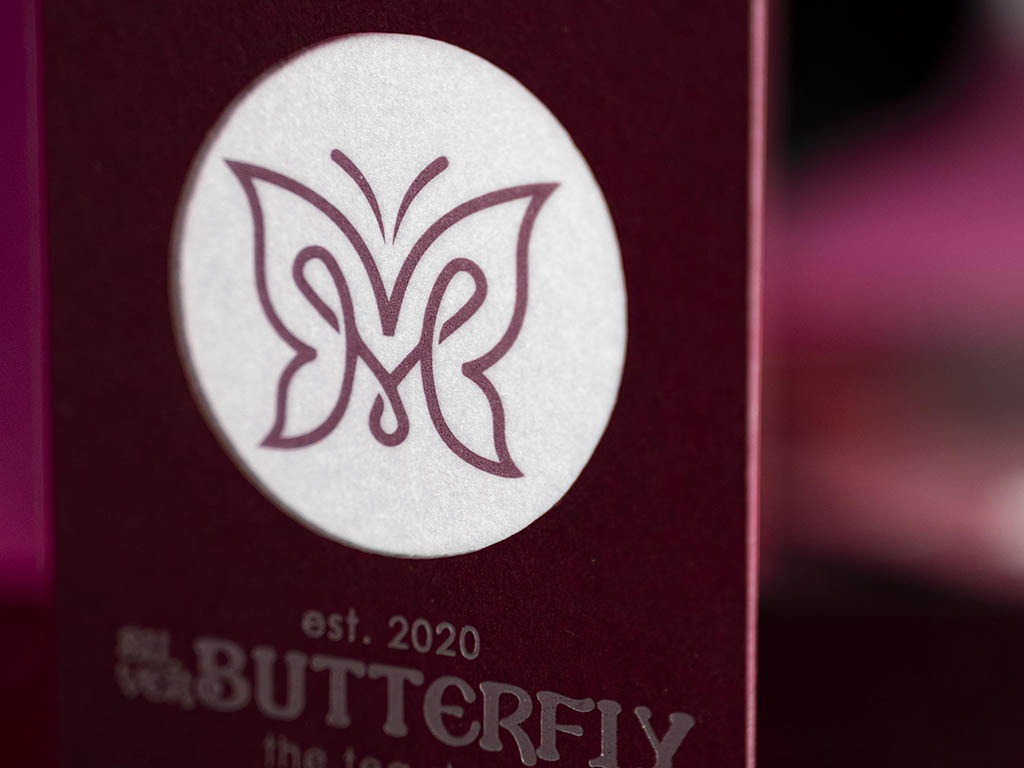
Curious Translucents Clear 160 gsm sits between them. One Pantone colour prints the butterfly on this centre sheet, so the image remains slightly veiled rather than looking like a conventional opaque insert.
Why the window is circular
The simple circular cut provides a stable, repeatable opening with enough paper around it to preserve the card’s structure. It also gives the butterfly a clear boundary without adding another printed frame.
PRODUCTION EXECUTION
Print and foil first; align the cut and layers before bonding.
The Pantone image is printed on the translucent sheet. Matt silver foil is applied to both outer faces. The two outer windows must then register to the centre artwork and to each other before all three sheets are bonded and cut to finished size.
Because the middle image is viewed through both faces, alignment errors would be visible twice. The job therefore depends on a clear layer map and separate vector artwork for foil, Pantone print and laser cutting.
Recorded specification
- Keaykolour Carmine 300 gsm, front and back.
- Curious Translucents Clear 160 gsm centre.
- One Pantone colour on the centre sheet.
- Matt silver hot foil on both outer faces.
- One circular internal laser-cut window.
- Triplex bonding, square corners and unpainted edge.
PRODUCTION DETAILS
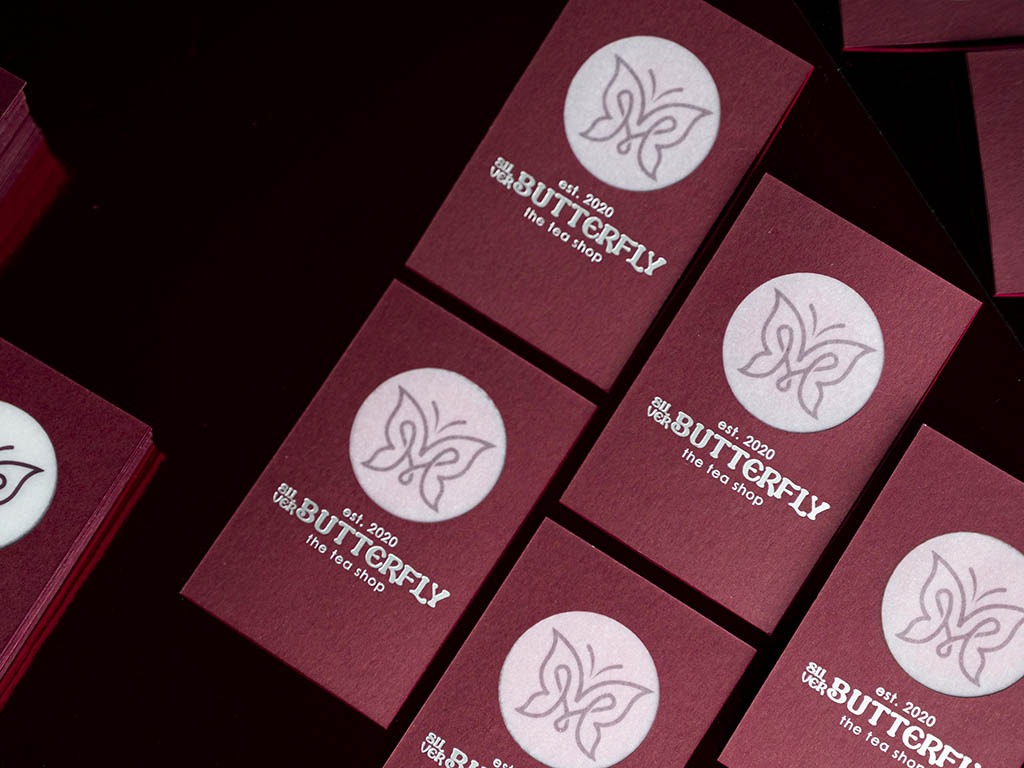
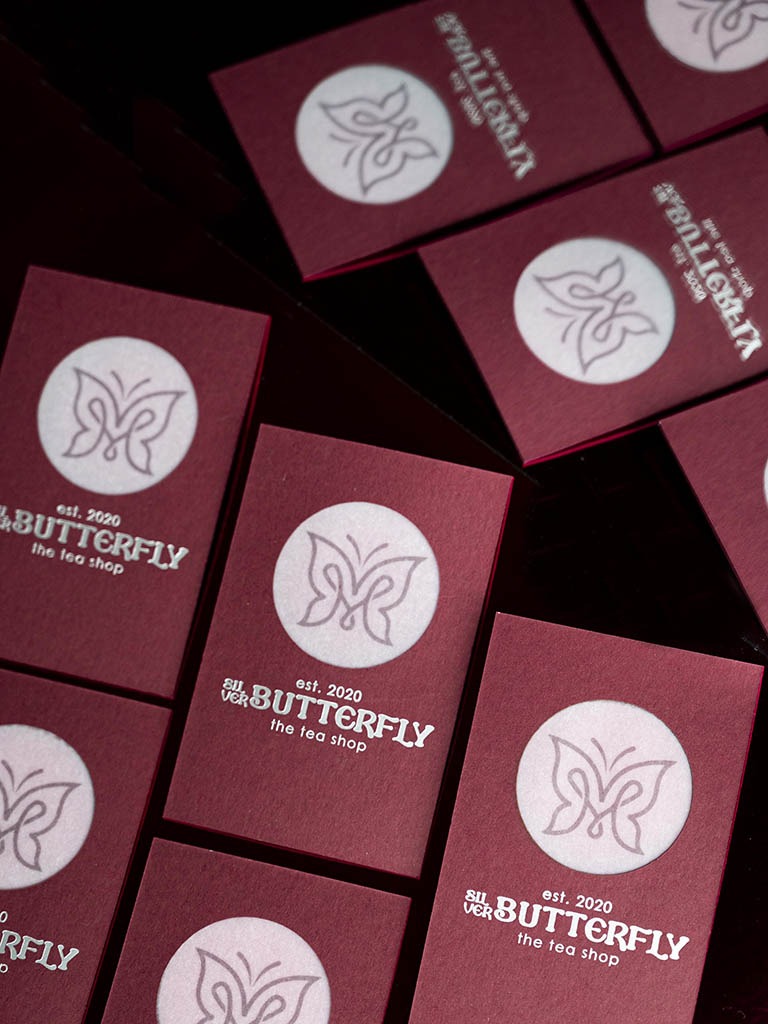
Matt silver foil, Carmine outer papers and the printed translucent centre.
BUILD FROM THIS STUDY
Use this card specification as your starting point.
Configure the related Triplex product by quantity, finished size, outer-paper family, paper colour and hot-foil colour.